10 Years in Biomedical Science: Jonathan Boxshall
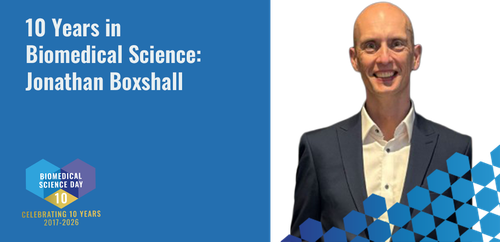
For Jonathan Boxshall, that journey has seen him move from a Senior Biomedical Scientist role into a Pathology Quality Manager and Deputy Clinical Pathology lead.
Looking back to 2017, what was your role then, and how has it evolved into the role you hold today?
I was a senior Biomedical Scientist in Blood Transfusion in 2017 in our centralised Transfusion laboratory. I was always working on the quality and incidents side of my core responsibilities, and it felt like a natural progression to move into a quality manager role focused on standards and regulations. Today, I am a Pathology Quality Manager and Deputy Clinical Pathology lead, so I have maintained the quality work I did earlier in my career. However, I now also support the running of the Pathology service.
From your perspective, how has the biomedical science profession changed over the past decade?
The biomedical sciences profession has been through a lot since 2017, and we really had the light shone on our profession during COVID. How work is being completed is constantly moving with new technology, which is adding to challenges for the workforce. Digital has especially had a significant impact with more of biomedical science being linked to digital services to support verification of methods, LIMS development, etc. Which, for us older folk, is more challenging.
What has been the most significant change in your specific area of practice during that time?
In Quality, moving from CPA to UKAS accreditation has been a big change, with UKAS assessment visits coming thick and fast, especially when I had four UKAS numbers to contend with! The change from 2012 to the 2022 standard was another change which needed planning and implementation, but all good quality management involves continual improvement, which, fortunately, is embedded in my organisation.
In what ways has your work contributed to patient care over the last 10 years?
Working with my pathology teams has contributed significantly to patient care over the last 10 years, including advances in technology and tests that increase sensitivity and specificity, enabling faster, more accurate diagnoses. The development of the molecular aspects of our Microbiology service is a significant improvement, particularly in enteric sample testing, which has reduced the initial diagnosis time from 24-48 hours to 4 hours.
What achievement or moment in your career so far are you most proud of, and why?
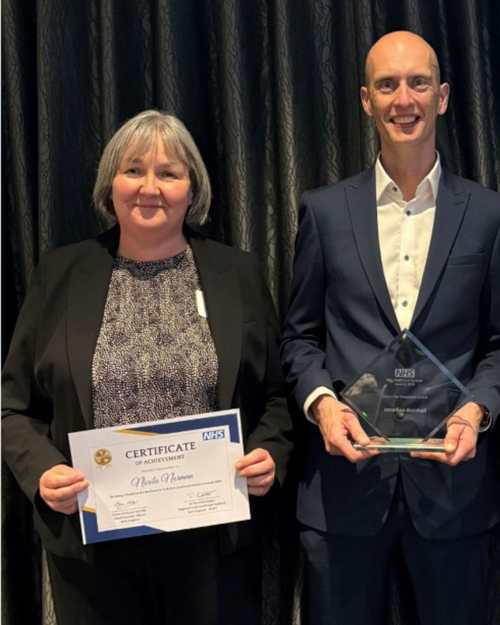
With the support of my trust (Northumbria Healthcare NHS Foundation trust) I was involved in a pilot for drones a few years ago for transporting patient samples and blood cell components. This was a very exciting innovation at the time and lead to a paper being published. I was also lucky enough to win 2 awards for the work on the project which I am very proud of for myself and my supporting team.
Innovation in biomedical science
Jonathan's journey shows how biomedical science careers have evolved alongside technological developments over the past decade, creating increasing opportunities to improve patient care.
His experience also highlights opportunities for biomedical scientists to drive change in their departments and win acclaim by examining technologies such as drones.
Do you have a story to share for Biomedical Science Day?
We’re always keen to hear from our members. If you’d like to share your story, please get in touch at [email protected]