
Honouring our communities: challenging perceptions
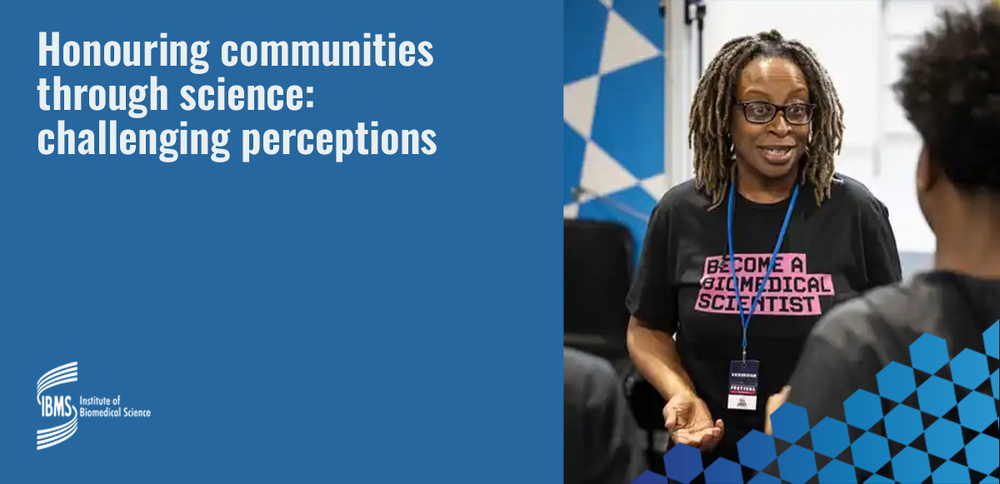
By Jean Wilson
Making biomedical science visible
My conversations with young people at outreach events have shown me that biomedical science is still largely a hidden career. Many are unaware that hospitals have laboratories, have never heard of pathology, or do not know about disciplines such as cellular pathology, microbiology, blood sciences and clinical biochemistry.
They recognise doctors, nurses and other healthcare professionals, but often do not realise how biomedical scientists contribute behind the scenes to diagnosing disease, monitoring treatment and supporting patient care.
Once young people see the profession in action, their interest often changes noticeably. Microscopy, laboratory demonstrations, practical activities and conversations with biomedical scientists help them connect classroom science with real healthcare.
Outreach has taught me that young people do not necessarily lack interest in science; they may simply need someone to show them that biomedical science exists and that it could be a career for them.
If they do not know the profession is there, they cannot pursue a career in it.
Challenging perceptions of science careers
I think the perception that young people are not 'clever enough' for biomedical science is partly created by the way science careers are presented.
Young people may assume that science is only for people who are exceptionally academic or naturally 'scientific'. The title 'biomedical scientist' itself can sound intimidating, while images of professionals in white laboratory coats working in highly technical environments can make the career feel distant or unachievable.
We can challenge that idea by explaining that success in biomedical science is not simply about being 'clever enough'. Commitment, curiosity, perseverance, communication, compassion and a willingness to keep learning are all essential.
We also need to show that the people behind the laboratory coats are professionals from different backgrounds, with different personalities and experiences, who entered the profession through a variety of routes.
My own journey is an example. I began my working life as a hairdresser and later returned to education as a mature student. I want young people to understand that they do not have to fit a stereotype or have their whole future mapped out at 16.
Sometimes what makes the difference is a visible role model who can say, "I was once where you are, and I found my way into this profession."
Encouraging young people to aim high
My journey into biomedical science has strongly influenced how I encourage young people.
When I was preparing to leave school, I told a careers adviser that I wanted a career in art. The response was, "What if your art doesn't sell?" This comment stayed with me. Rather than helping me explore my interests and possibilities, it made me question my aspirations.
That experience made me aware of how much influence adults can have on a young person's confidence and choices. It is one of the reasons I try to encourage ambition rather than place limits on what someone believes they can achieve.
When I speak with young people, I listen to what interests them, encourage their curiosity and help them recognise possibilities they may not have considered.
I want biomedical science to feel achievable rather than like a career intended for somebody else. I want them to leave the conversation thinking, "Maybe I could do that."
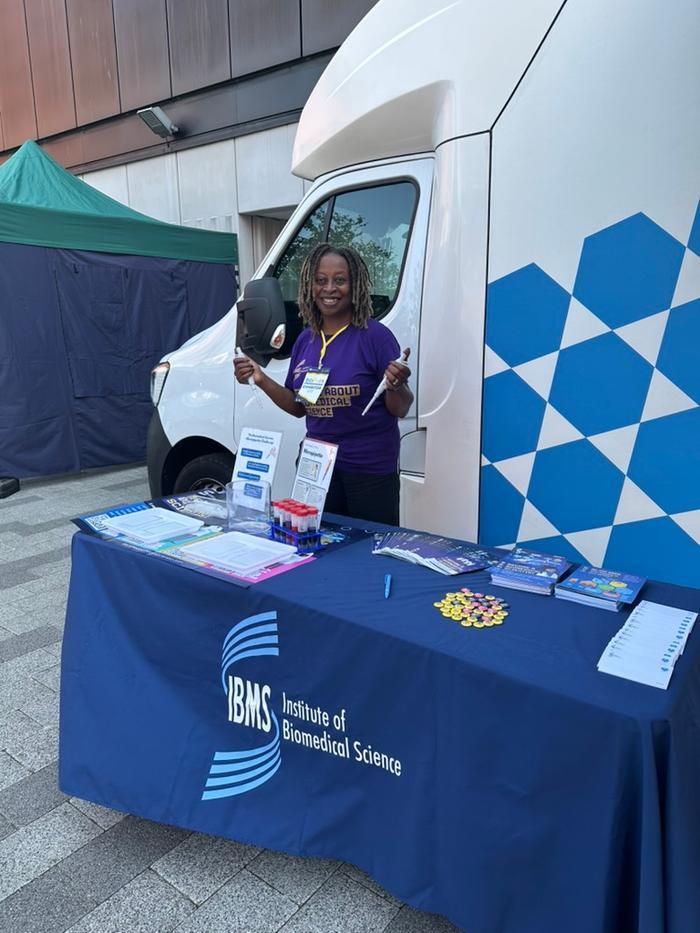
What honouring our communities means to me
To me, 'Honouring Our Communities' means recognising the people, experiences and contributions that have shaped us, while investing in and strengthening the next generation.
It includes celebrating the achievements of Black people in healthcare and biomedical science and creating more opportunities for young Black people to explore careers they may never previously have considered.
For me, the theme is about more than celebrating Black History Month once a year. It is about making an ongoing contribution, encouraging young people, building their confidence and helping them recognise that they too have a place in science.
It also means honouring those who came before us and opening doors for those who will follow.
If my outreach work at schools, careers events and community activities encourages even one young person to believe in their abilities, consider biomedical science and see healthcare science as somewhere they belong, then I feel I am giving something meaningful back to the community.
The importance of representation
It is extremely important for young Black people to see people they can identify with in biomedical science and healthcare. Meeting someone with a similar background, or hearing a career story that feels relatable, can make a profession seem genuinely possible.
Representation is not only about appearance. It is also about hearing different accounts of success and seeing people actively working in roles that once felt out of reach.
That visibility can shift someone's thinking from "People like me do not get jobs like that" to "Maybe I could do that too."
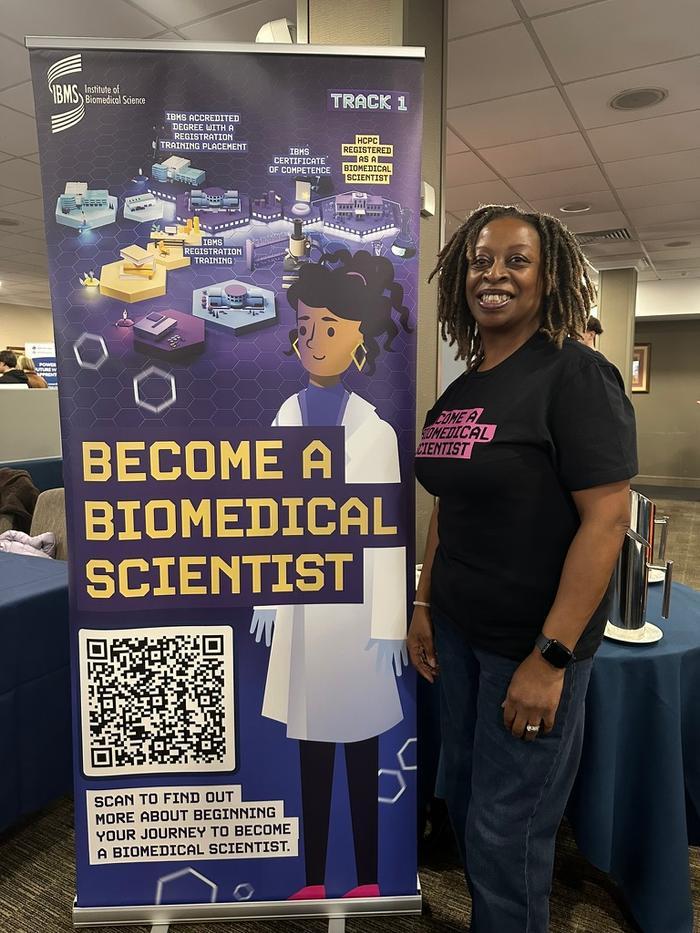
Outreach gives me the opportunity to share my experience as a biomedical scientist, answer questions and encourage young people's ambitions.
These conversations can help break down invisible barriers, whether created by limited exposure, other people's expectations or a young person's own doubts, and show that the profession welcomes and values people from different ethnicities and backgrounds.
Breaking down barriers
Several barriers remain. One of the biggest is awareness. If young Black people and their families do not know about biomedical science or understand the different disciplines within pathology, they cannot consider it as a career option.
Representation also matters. When people do not see members of their community working in the profession, it can reinforce the idea that they do not belong there. Socioeconomic pressures may create further obstacles, particularly where the cost of higher education can be expensive.
Access to careers information, work experience and professional networks is not always equal. Some young people may also have limited guidance on navigating educational routes and professional pathways.
There is potential in every community, and a person's background or postcode should not determine whether they have the opportunity to learn about biomedical science.
Engagement therefore needs to begin early. By bringing careers information into communities and sharing the experiences of biomedical scientists from a wide range of backgrounds, we can help young people recognise their potential and begin to remove these barriers.
Building stronger connections with communities
Biomedical scientists and organisations such as the IBMS have a responsibility to make the profession more visible.
Effective engagement means taking biomedical science out of the laboratory and into communities through sustained relationships with schools, colleges, youth organisations, community groups and careers events.
Organisations can support more biomedical scientists to become ambassadors by working with laboratory managers to give staff the time and encouragement to participate in outreach.
Activities should focus particularly on areas where young people have limited exposure to healthcare science and should be developed with communities so that they are relevant, accessible and responsive to their needs.
Good engagement also requires listening. We should ask young people what they already know, what interests them, what concerns them about choosing a career and what might prevent them from considering biomedical science. These conversations need to happen early, before important education and career decisions are made.
We also need to tell a wider range of stories about who can become a biomedical scientist, including different routes into the profession, varied backgrounds and career journeys that are not always straightforward.
Practical activities, demonstrations and direct conversations with professionals often make a far greater impression than handing out leaflets.
If organisations want a more ethnically diverse future workforce, they must make biomedical science visible, accessible and welcoming. Conversations about equality, diversity and inclusion are essential, and outreach provides an opportunity to demonstrate these as core values upheld by the profession.
Outreach opens the door to opportunity. We may not know which career a young person will ultimately choose, but we can make sure they know that biomedical science exists and that there is a place for them within it.
About Jean
Jean Wilson is a Specialist Biomedical Scientist working in the NHS, with more than 20 years of experience in the profession.
Having begun her working life as a hairdresser before returning to education as a mature student, Jean is passionate about encouraging young people to explore careers in biomedical science.
Through her involvement in schools, careers events and community outreach, she works to raise awareness of the profession, challenge stereotypes and help young people recognise their potential, regardless of their background.