Invisible No More! Invisible Disability Awareness Week 2026
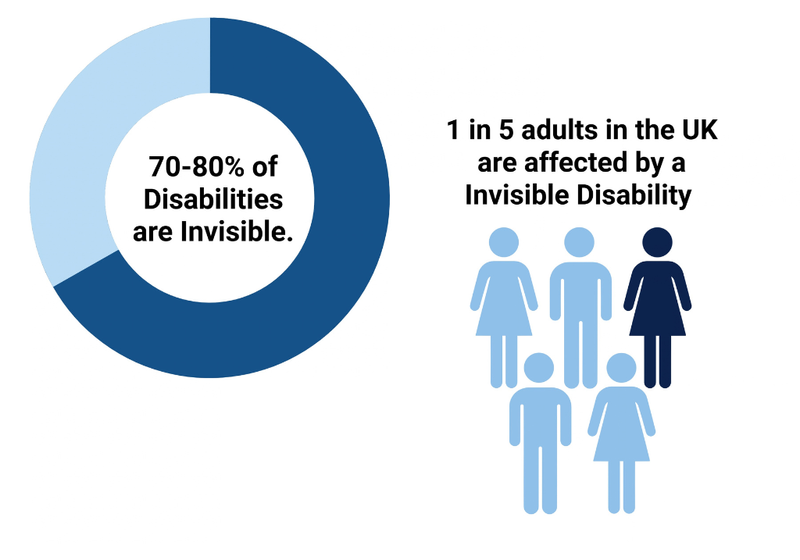
Invisible Disability Week (18th-24th of October) highlights the need for greater awareness and understanding of disabilities that may not be immediately apparent. 70-80% of disabilities are invisible, meaning that 1 in 5 adults in the UK are affected. These disabilities are wide-ranging, from long-term medical conditions like diabetes and Crohn's, to mental health conditions and neurodivergences such as autism and dyslexia.
Often, individuals living with these invisible disabilities “look fine” but could be battling symptoms from their condition or side effects from treatments. The Invisible Disability Association campaign slogan, “Invisible No More!”, is a call to action that highlights the exhausting reality many people with invisible disabilities face. They often find themselves repeatedly having to explain, advocate or defend themselves when their symptoms or need for support is overlooked or dismissed.
This ongoing battle can severely damage an individual’s mental health, self-esteem, and, consequently, their personal and professional life. Fear of stigma or discrimination may discourage individuals from being fully open about their condition, leading them to ‘mask’ their difficulties to avoid having their competence questioned. Masking can be quietly exhausting and can push staff toward burnout.
Biomedical Science is a very unique profession with its own unique working environment. Because of the nature of the job, the laboratory can be a high-pressure environment. It involves thousands of patient samples, highly standardised procedures, and strict turnaround times. While all are very important for patient safety and the delivery of high-quality care, there can be some unseen points of friction present for staff with invisible disabilities.
Whether it’s sensory overload from loud automated analysers or the physicality of processing a reagent delivery. These routine aspects of a Biomedical Scientist's role can be both physically and mentally draining for those with an invisible disability. They require immense resilience that likely goes unnoticed by colleagues.
A Personal Perspective
I live with a rare genetic disease called Cystinosis, which I was diagnosed with at seven months old. Cystinosis affects every aspect of my life and requires a round-the-clock medication regimen. My main medication must be taken every 6 hours, 4 times a day, from 6 am to midnight, every single day.
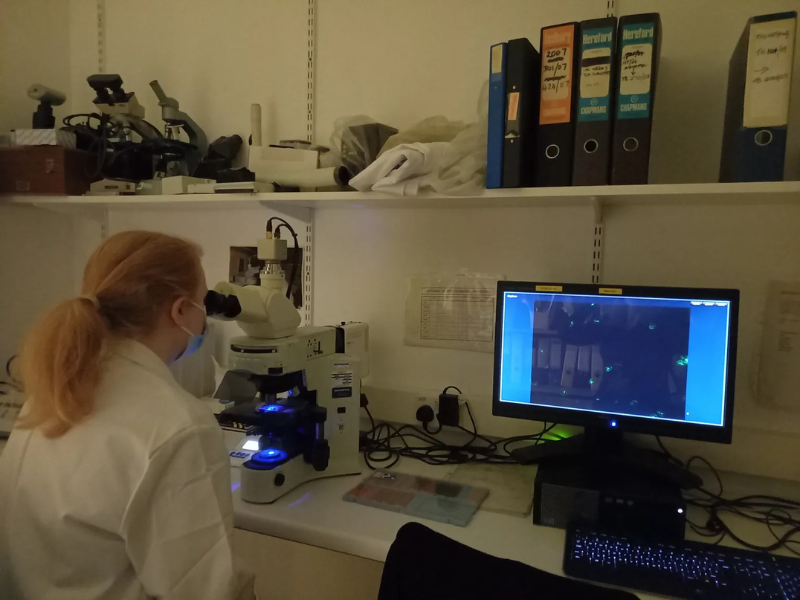
My condition is well controlled, which means its effects are mostly invisible to those around me. However, while working as a Biomedical Scientist in the NHS, I needed reasonable adjustments to support me in my role. For example, I needed to avoid physically demanding tasks, such as moving heavy bulk orders of reagents, which exhausted me faster than my colleagues. I also needed additional hydration breaks and extra time to carry out some tasks.
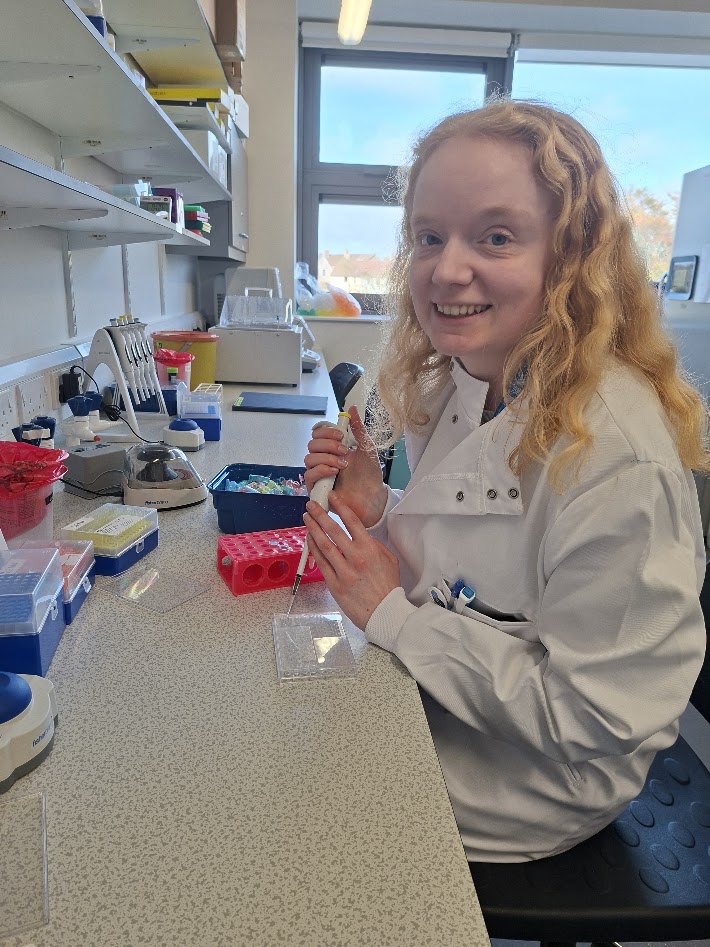
Since transitioning from the NHS back to academia, I have been diagnosed with dyslexia and dysgraphia. Receiving this diagnosis at 25 was a very validating experience. Finally, I had an explanation for years of quiet struggle. Although I was supported due to my chronic condition, throughout my time in education from primary school to undergraduate, there was no formal neurodiversity diagnosis. Having this new ‘label’ was like someone had turned a light on.
When I began my career as a Biomedical Scientist, I felt like I was thrown into the deep end, and that quiet struggle became more pronounced. Sequences and numbers were getting muddled, quality control data was sometimes misinterpreted, and dense SOPs often took me longer to process and get a grip on.
It was exhausting and caused a slow decline in my mental health and self-esteem. Now, in reflection, it was never a question of capability; rather, it was that I was trying to navigate an environment that was not adapted to my neurodivergent brain and chronically ill body. I am now learning how to better support both aspects of my invisible disability.
Creating an inclusive environment isn’t about rewriting the laboratory handbook. It is about building a culture of empathy, flexible adjustments, and psychological safety. This Invisible Disability Week, let’s commit to looking beyond what is visible on the surface, ensuring every scientist is fully supported to thrive #AtTheHeartOfHealthcare, so we are invisible no more!
Learn more about Invisible Disabilities and Cystinosis
Coping with invisible disabilities
UK Parliament Post: Invisible Disabilities in Education and Employment
Lena Forsyth is the newly appointed EDI working group representative for Scotland. Her other roles in the IBMS involve managing the IBMS in Scotland Social media channels. Lena is currently a PhD Student at Robert Gordon University, studying Trauma-Induced Coagulopathy.