Race and Ethnicity: A new perspective
Even though race and ethnicity are different, they are often used interchangeably. While they can be interrelated, according to the Oxford Dictionary, race refers to a person’s skin tone and physical characteristics, while ethnicity tends to mean a person’s heritage and culture.
The significant change in the multicultural population in my part of Scotland over the past 20 years cannot be underestimated. When I arrived in Edinburgh as a student over 23 years ago, I found hardly any other people from my race and culture at university.
Living in a modern world, it’s impossible for someone not to have seen, met, or associated with someone of a different race and ethnicity from their own, because, as the saying goes, ‘It’s a small world’. The question now for us all is: How do we approach race and ethnicity with a new perspective?
Although privileged to gain employment with the NHS, I was, for the first 8 years of working, in my department, the only ethnic minority staff member from my race and culture working there. This came with the challenges of trying to fit in and understanding my newfound culture.
Fast forward to today, a number of factors led the government to launch an initiative to sponsor international professionals to fill the workforce gap caused by a high number of staff retiring, combined with the challenges of finding homegrown Biomedical Scientists.
The sheer influx of international professionals from unfamiliar races and cultures in the healthcare workforce was met with apprehension and caution by both patients and colleagues. This highlights the importance of proactively addressing race and ethnicity in healthcare.
One way the health board can approach this is by developing mandatory strategic educational and training plans for all staff (including management) across the organisation. This could provide guidance on expectations and the need for tolerance at professional levels, and ensure that all staff are trained to be sympathetic and tolerant towards others despite cultural differences.
Another is by practising openness and fairness from the start point of the recruitment process through to job commencement, and by providing support if any issues arise, while also giving opportunities to progress in the chosen profession in the same way as home staff.
Each individual should be treated with respect and mutual understanding to foster a healthy working relationship and to ensure staff know they are valued. It is not always possible to understand other people’s cultures; however, it is absolutely possible to treat individuals with care, dignity, respect, and compassion, especially in a professional environment in keeping with NHS values.
Diversity, in whatever shape or form, is worth celebrating and valuing, as it fosters openness and acceptance. For example, my department holds an annual cultural day that promotes the appreciation of cultural diversity. We celebrate through the sharing of food, poems, facts, and traditional dress codes.
The IBMS has highlighted this issue by updating its Standards of Good Professional Practice and Conduct (2023) to include ‘Inclusion’ with Equality and Diversity. This provides guidance for all registered Biomedical Scientists to recognise and have a proactive role in acknowledging the impact race and ethnicity can have on workplaces.
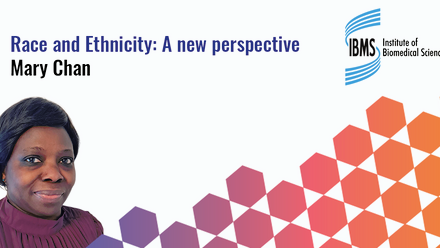
Mary Chan is a Specialist Biomedical Scientist at WGH Blood Sciences, Edinburgh.