Introduction

David Wells
IBMS Chief Executive
I’m proud of all the work we achieved during the last strategy period. The IBMS is a very different organisation to the one I took over in 2021. We’ve grown in every facet that we need to. We’ve brought our qualifications into the modern age, changed our advocacy work dramatically, raised our profile and helped grow the number of biomedical scientists taking on consultant roles.
For me, some of the highlights of the previous strategy period were:
- increasing the number of people that we trained as verifiers
- launching digital portfolios for all of our core qualifications to make them more accessible to members
- our ‘Become a biomedical scientist’ campaign reaching over 1 million views on social media
- recruiting new digital and learning staff into the team to support changes in the way people learn.
Our advocacy work has changed a lot during this strategy period. We’ve published white papers and developed strong links with the government and policy leads in the NHS. Organisations like Roche Diagnostics, AstraZeneca and Microsoft for Healthcare approached us to work on papers with them. People are now seeing us as an organisation to be associated with. This is a really positive step for the IBMS.
Serving parliamentarians attended our last few Congresses, which has never happened before. Members of the UK government are attending and speaking at the event, which shows how the profile of the IBMS has increased.
The focus of our 2026-2029 strategy
Our new strategy builds on the success of the 2022– 2025 one. We made significant progress and delivered strong outcomes in the last strategy period and will now take it to the next level.
Our ambition for the 2026–2029 strategy is to position the IBMS as the recognised leading professional body for biomedical science, advising on pathology, both in the UK and internationally. We want members and policymakers to see the IBMS as an organisation they need to engage with.
Supporting our members
We want to meet the needs of current and future members, from students to registered biomedical scientists. This includes providing high-quality CPD and qualifications so members can progress their careers in biomedical science.
None of this work is possible without our volunteers. This includes Council members, our President, volunteers who help set exams and people who verify them, and those sitting on Specialist Advisory Panels. The previous strategy was delivered in support of the membership, by the membership, and our new one recognises that everyone’s got a part to play in delivering it.

David Wells
IBMS Chief Executive
Key highlights

- We increased the number of verifiers by 33% between 2022 and 2025, bringing the total to 927. This is helping us to assess more registration training and specialist qualifications for biomedical scientists.
- Our ‘Become a biomedical scientist’ campaign reached over 1 million people on social media between 2022 and 2025 and received three membership sector awards. The campaign raised awareness of biomedical science careers and guided aspiring professionals into the field.
- To support trainers and training officers in the laboratory, we started hosting regular webinar sessions on our Support Forum in 2023. These are supporting experienced and new training officers to share ideas and solve problems together.
- Our collaboration with NHS England and Health Education England means that learners across England received nearly £1 million worth of funding to complete IBMS qualifications.
- In 2023, we launched an Advanced Specialist Diploma in Bowel Screening Histopathology Reporting and one in Cervical Histopathology Reporting. Biomedical scientists who take on these roles after qualifying will help to reduce waiting times for cancer diagnosis.
- We published and promoted our bold Long Term Biomedical Scientist Workforce Plan. It sets out the support and opportunities we will provide to biomedical scientists to keep pace with the rapidly changing profession and patients’ growing needs. The plan outlines our commitment to making sure biomedical scientists will be a key part of successfully delivering on the NHS Long Term Workforce Plan.
- The presence of biomedical scientists in the bowel cancer patient pathway benefits the NHS by an estimated £115 million to £571 million a year. That was one of the findings of an independent report, from economics consultancy Oxera, about the impact of biomedical scientists on the bowel cancer patient pathway. It demonstrates the need for wider recognition from the UK government of the biomedical scientist workforce.
Aims

 Part one
We will build on our experience and expertise
The long-term future of the IBMS will depend on the future of the profession. Biomedical science needs to keep pace with technology and advances in healthcare. To help achieve this, we must make sure that the IBMS remains relevant and fit for purpose for members.
Aim 1
Support more access to the Health and Care Professions Council (HCPC) registration through better uptake of entry routes to become a biomedical scientist. Provide greater clarity of the routes to entry and encourage more students to choose the most efficient route to HCPC registration. Champion the role of trainers and training officers in the laboratory.
Aim 2
Progress our current members’ knowledge, experience and their careers through better and more relevant training and qualifications, using our existing structures but allowing a more agile application. Create a more inclusive approach to support greater diversity, championing our members’ values such as sustainability and clear professional standards.
Aim 3
Promote our highest qualifications, widening the disciplines that these are available in and increasing the number of members accessing them.
 Part two
We will build and develop our future
This part of the strategy looked at how we would use our reserves between 2022 and 2025 to support the IBMS, our work and our members.
Aim 1
Promote our profile post-pandemic, to develop a policy and engagement capability at government level for each of the four nations.
Aim 2
Progress the numbers and range of members that the IBMS attracts, within the UK and globally.
Aim 3
Support the understanding of the benefit the profession and biomedical science delivers to society.
Support

Part 1
We supported access to HCPC registration
- The number of verifiers increased by 33% between 2022 and 2025, bringing the total to 927. This helps us to assess more registration training and specialist qualifications for biomedical scientists. We recruited and trained more verifiers by holding extra ‘Train the Trainer’ events on the updated Registration Training Portfolio and Specialist Portfolios.
- We launched digital versions of the IBMS Registration Training Portfolio on OneFile. This is allowing training officers to create tailored training and assessments for candidates and it simplifies the administration of the Registration Training Portfolio.
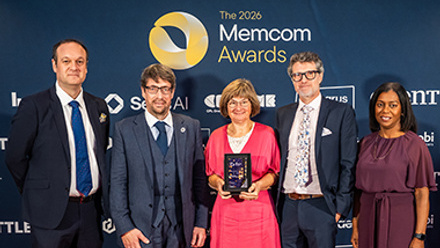
- Using a combination of virtual reality and targeted video, the ‘Become a biomedical scientist’ campaign reached over 1 million people on social media between 2022 and 2025. The campaign also won three awards in 2024 at the Association Excellence Awards and Memcom Excellence Awards.
-
 To highlight the different ways people can become a biomedical scientist and the importance of taking an IBMS Accredited degree, we designed and shared a new ‘IBMS Accredited’ logo with all accredited universities to use on their websites and social media channels.
 - We started hosting regular webinar sessions on our Support Forum in 2024 to support trainers and training officers in the laboratory. These are supporting experienced and new training officers to share ideas and solve problems together. Topics include reflective writing skills and leadership and management in laboratory services.
- Our collaboration with NHS England and Health Education England means that learners across England received significant financial support to complete IBMS qualifications. This included:
- £211,000 for the Certificate of Expert Practice
- £14,000 for the Higher Specialist Diploma (HSD) in Leadership and Management
- £363,000 for Histology Reporting
- £255,000 for Cytology, Dissection and Immunocytochemistry
- £123,000 for HSD in Scientific Disciplines.
Part 2
We supported people's understanding of the profession by demonstrating the value of biomedical science
- The presence of biomedical scientists in the bowel cancer patient pathway benefits the NHS by an estimated £115 million to £571 million a year. That was one of the findings of an independent report, from economics consultancy Oxera, about the impact of biomedical scientists on the bowel cancer patient pathway. It demonstrates the need for wider recognition from government of the contribution of the biomedical scientist workforce.
- The British Journal of Biomedical Science (BJBS) achieved its highest-ever Impact Factor of 4.6 in the 2025 Journal Citation Reports, placing it in Quartile 1 and fifth overall in its subject category. This milestone reflects the journal’s growing influence and its continued success in publishing high-quality, peer-reviewed research that supports and advances biomedical science in clinical practice.
Progress

Part 1
We progressed members' careers and professional development
- We recruited new learning and digital roles at the IBMS to better serve our members. For example, we recruited a Head of Digital Education, who created digital versions of the IBMS Registration Training Portfolio and developed training and resources for candidates, training officers and verifiers.
- Most of the Specialist Portfolios were moved online in 2024 to make them more accessible to members. Candidates can now submit all of their evidence on a single platform, examiners can review and assess submissions digitally, and training officers can review evidence before it is submitted and track it after.
- The number of examiners increased by 23% between 2022 and 2025, bringing the total to 612. This is helping us to assess more registration training and specialist qualifications for biomedical scientists.
- Since 2023, we have been hosting regular webinars for members on the IBMS Support Hub on our website. This includes topics such as: how to write a CV; equity, diversity and inclusion (EDI) in biomedical science; and biomedical scientist careers in the armed forces.
- We launched a Qualifications Journey campaign in 2025 to promote IBMS qualifications and explain how they can help members to progress their careers. The aim was to increase people’s understanding of the different qualifications. This included creating three videos, which we shared on social media, in our newsletters and on our website. We have also developed the qualifications section on our new website, to make our qualifications easier to understand and access.
Part 2
We progressed the numbers and diversity of our membership
- We introduced a new pricing structure for members from low- and medium-income countries. We changed from using the United Nations list of least developed countries to applying the discount to overseas members through the World Banking List. Now, the number of members who benefit from the 50% discount has increased from 46 to 138.
- We set up an EDI Working Group in 2022 to make sure we listen to a wide range of our members’ voices. Creating an inclusive environment will help to bring new perspectives, opportunities, approaches and ideas to the profession. Since 2017, the IBMS has used the Science Council Diversity and Inclusion Progression Framework to track its progress on diversity and inclusion. In July 2025 the Science Council published our progress against this framework. The findings include:
- We established strong governance and commitment from leadership on EDI. This includes our EDI Working Group, with two executive leads and a named trustee accountable for EDI. EDI is included on every Council agenda and is regularly discussed at board meetings.
- Our events, marketing and communications all have EDI on the agenda. We include a range of EDI topics in our membership magazine Biomedical Scientist and in regular webinars and events.
Promote

Part 1
We promoted the highest IBMS qualifications
- We developed new, and updated existing, Advanced Specialist Diplomas (ASDs):
- In 2023, we launched an updated version of the ASD in Ophthalmic Pathology. This is helping biomedical scientists to validate their expert knowledge and skills in dissecting and reporting selected ophthalmic pathology samples (tissues and fluids from the eye). They will also become a Fellow of the IBMS.
- In the same year, we launched an ASD in Bowel Screening Histopathology Reporting and one in Cervical Histopathology Reporting. Biomedical scientists who take on these roles after qualifying will help to reduce waiting times for cancer diagnosis.
- We also revised our ASD in Histological Dissection. These qualifications are aimed at senior members of our profession who have the ability and opportunity to take on some roles that are similar to those of medical consultants.
- We launched a new Diploma of Expert Practice (DEP) in Ultrastructural Pathology in 2025. Ultrastructural pathology provides a detailed examination of tissues at a microscopic level and can help diagnose certain cancers and rare genetic disorders.
- In 2023, we launched a new Certificate of Expert Practice (CEP) in Laboratory IT and Clinical Information. This provides extra support for biomedical scientists taking on more information technology-based roles
Part 2
We promoted the profile of the IBMS post-pandemic
We had great successes with our public and government engagement work in our last strategy. This significantly raised the profile of the IBMS and highlighted the vital role of the profession. During the course of the strategy, we worked with public affairs consultancy PLMR to grow this area of work.
Here are some of our achievements:
- We collaborated with other scientific bodies to lobby for changes in immigration policy, contributing to a paper drafted by NHS Employers at the request of the Department of Health and Social Care. We worked with NHS England, the HCPC and the Department of Health and Social Care. It addressed the increased pay thresholds for international recruitment and changes to how occupations are considered for visas.
- We built stronger links with MPs, ministers and health leaders across the UK. This included with MP Greg Smith, who raised awareness in parliament of the need for a sustainable supply of biomedical scientists into the NHS after he attended our January 2024 session in Parliament.
- We published guidance, white papers and workforce plans:
- In 2022, we began publishing practical professional guidance with a clear policy message. Our early work focused on supporting safe, consistent training and service delivery, including updating IBMS laboratory training guidance.
- In 2023, we moved into a more strategic phase with the IBMS Long Term Biomedical Scientist Workforce Plan. This set out actions to build, retain and develop the biomedical science workforce.
- We then started publishing targeted white papers to show where diagnostic services could benefit the healthcare system. We worked in partnership with Microsoft for Healthcare in 2023 to produce a white paper on digital pathology. Then, in 2024, we worked with AstraZeneca UK to publish a white paper on how the biomedical scientist workforce could help to create sustainable capacity for cancer testing.
- In 2024, we published two white papers, setting out practical routes to improving access, consistency and modernisation within cervical screening services.
- In 2025, we partnered with Roche Diagnostics to publish the Power of Testing, with support from the Royal College of Pathologists and the Association for Laboratory Medicine. It showed that the UK can build a more preventative, efficient and resilient healthcare system fit for the future by prioritising investment in in vitro diagnostics across the NHS. These are tests that can detect disease, conditions and infections.
- At the end of 2025, we strengthened the evidence base for transforming pathology services, by commissioning Lord Patrick Carter to lead an independent UK-wide review. This review of pathology services will provide a clear baseline for the workforce, meaning future decisions will be grounded in robust, comparable data. We are working in partnership with other healthcare professional bodies to engage pathology services and evaluate the findings.
- We responded to key policy reports and inquiries, reinforcing our voice of the biomedical science profession. This included:
- calling for more investment in diagnostics and community-based services in our response to Lord Darzi’s independent investigation into the NHS
- calling for the unique capabilities of the biomedical science community to be integrated into future pandemic preparedness plans following the UK COVID-19 Inquiry’s findings
- highlighting the importance of investing in innovative diagnostics, such as artificial intelligence-driven tools in laboratories and telehealth, in our response to the UK government’s 10-year Health Plan.
- We raised the profile of the profession at events, policy discussions and sector conferences. This included organising the biennial IBMS Congress. IBMS Congress events during the strategy period demonstrated their continued success, attracting over 4,000 attendees and strong exhibitor engagement. Overall attendance increased from 3,844 in 2023 to 4,037 in 2025, with exhibition visitors rising by nearly 38%. This highlights Congress’s vital role in bringing the profession together, supporting professional development, and showcasing innovation across biomedical science.
- We advocated for investment in the biomedical science workforce to strengthen the diagnostics sector and ease pressures in the NHS. To meet growing demands, we called on the UK government to increase capacity in biomedical science, improve retention of staff, and unlock funding for training positions. Securing funding from the UK government is crucial to maintaining a robust talent pipeline and making sure patients receive earlier, more effective treatments.
- In 2025, we engaged with the UK government’s health reform programmes, including the 10-Year Health Plan. This included drafting and submitting formal responses to calls for evidence, developing policy briefings, and speaking with ministers, parliamentarians and officials. This helped to position biomedical science at the centre of diagnostics policy across the UK nations.
Strategy 2026-2029

Part 1
We will extend our experience and expertise
AIM 1
We will continue to support the biomedical science workforce by delivering a sustainable pipeline of future biomedical scientists who are HCPC registered, and supporting those working in the field with relevant qualifications and training.
Currently, there are about 4600 people who are eligible to become biomedical scientists each year. But only around 1200 people a year become biomedical scientists. We want to make sure as many people as possible can take on this role so our laboratories have a sustainable workforce. We will do this by:
- encouraging greater recognition for trainers and trainees. If we can support more people to become dedicated trainers, we can grow the biomedical science workforce
AIM 2
We will progress our current members’ careers by providing more relevant CPD, training and qualifications. We will also foster and support equality, diversity and inclusion in the workplace and champion our members’ values and clear professional standards.
To do this, we will:
- make sure all of our members have access to relevant high-quality CPD that they can do at their own pace, including providing CPD on topics like wellbeing and EDI, which are newer components of the HCPC registration requirements for CPD; our focus is on building the skills that well-rounded healthcare professionals need to progress in their careers
- support members to develop leadership skills
- identify gaps in current qualifications so more biomedical scientists can progress in their careers and take on advanced roles
AIM 3
We will promote our highest qualifications by supporting consultant biomedical scientist roles where services and patients will benefit from their presence. We will widen the disciplines of these qualifications and increase the number of members accessing them.
Only around 200 biomedical scientists currently occupy consultant roles. To increase the number of biomedical scientists taking on consultant roles, we will:
- raise awareness of the benefits that consultant biomedical scientist roles in healthcare offer; we will continue to talk about the importance of these roles and how they add value to services
- promote and support greater uptake of advanced qualifications
- continue to develop new qualifications where a clear need is identified.
Part 2
We will build and develop our future
AIM 1
We will promote our profile and that of our members, to further develop a policy and engagement capability at government and international level.
We will do this by:
- continuing with our public and government engagement work to further raise the profile of the IBMS and demonstrate the value of the profession
- continuing to publish reports and white papers and develop guidance aimed at the UK government
- celebrating our membership and the profession through public engagement and membership events.
AIM 2
We will retain, expand and diversify IBMS membership across the UK and internationally.
We will do this by:
- developing tailored benefits that meet the evolving needs of current and future members
- actively promoting IBMS membership to registered biomedical and clinical scientists
- setting up an international faculty to share experiences, gain insights from across the globe and provide advocacy to international bodies and governments
- developing a CPD offer that is relevant to members, wherever they work.
AIM 3
We will increase understanding of the benefit and impact that the profession and biomedical science delivers to society by promoting our members’ values and how these are applied in practice.
We will do this by:
- continuing to undertake peer-reviewed and evidence-based research to promote the profession
- identifying opportunities where the IBMS can support the profession
- continuing to develop areas of work that are important to members’ values, including sustainability, well being and EDI.
AIM 4
Ensure that the IBMS remains robust and sustainable to support members in the years to come to encourage continued membership throughout their careers.
We will do this by:
- making sure the IBMS can continue to deliver highprofile educational events and services needed by members
- ensuring the IBMS attracts and works with the best talent in terms of staff, volunteers and experts
- making sure the IBMS diversifies its income in line with its aims and objectives
- ensuring the organisation’s infrastructure (e.g. member-facing systems, back-office systems and staffing) is robust, and up to date.
Video
Watch the recording of the recent Strategy Review Webinar
IBMS Strategy Review 2022-25