Reflections on the ABSW Media Fellowship

Biomedical scientists play a central role in healthcare, education and research, yet much of the work remains invisible to the public.
One of the main reasons I applied for the Association of British Science Writers Media Fellowship, supported by the Institute of Biomedical Science, was to understand better how scientists, particularly those with a laboratory background, can communicate their work clearly, responsibly and effectively beyond the laboratory.
My Fellowship combined structured media training with a placement at BBC Ideas, and culminated in the development of a film, Would You Donate Your Body to Science? Together, these experiences reshaped how I think about communication, collaboration and the role of biomedical scientists in public-facing science.
The Fellowship properly began with formal media training delivered by Boffin Media. This initial session was in-person in London; however, personal circumstances prevented me from attending on the day. Thanks to modern technology, I was able to participate remotely.
Training focused on how different parts of the media operate, how journalists and producers approach stories, and how scientists can contribute effectively within those constraints.
A key practical exercise towards the end of the day involved producing a five-minute podcast on a topic drawn from the local area. Fellows were encouraged to get out into the surroundings of the training venue, into the community, speak to people directly, and build a short piece around what they found.
This provided the first challenge. I wasn’t physically able to take part in this; however, I supported the process remotely from Belfast, sourcing background information and quickly reviewing maps that my colleagues on the ground couldn't. My group ended up engaging with members of a local community organisation, while I fact-checked details and recorded audio contributions, which I sent via WhatsApp.
The process was deliberately informal and, at times, chaotic. That was the point. The exercise forced us to move quickly, identify what really mattered, and strip away anything non-essential. It was an early lesson in one of the Fellowship’s most important themes that good communication is about distillation, not dilution.
After a bit of back and forth with the ABSW Team, to find the best pairing, my placement was with BBC Ideas, a small team producing short films for curious audiences. BBC Ideas operates very differently from a traditional newsroom. There is no focus on breaking news; instead, the team works at a slower pace, developing content built around enduring questions and thoughtful exploration.
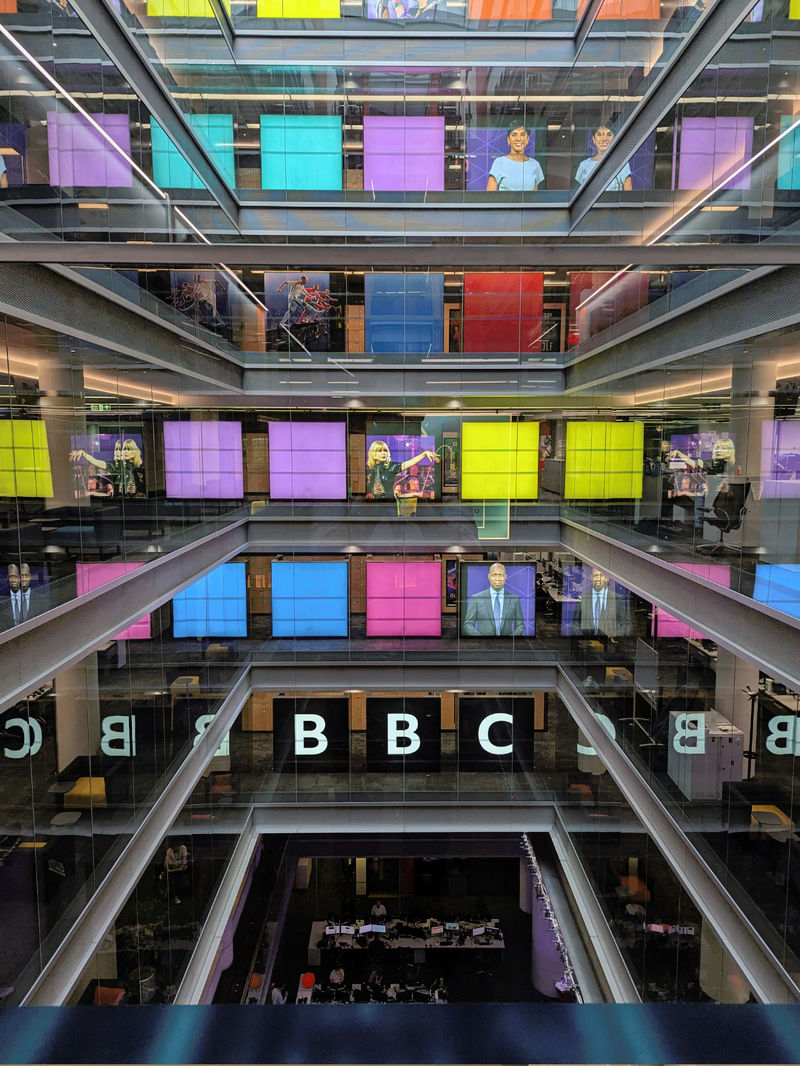
After an initial introduction at BBC Broadcasting House in London, much of my placement was carried out remotely from Belfast, with regular online meetings, emails and planned visits to London. This hybrid approach fitted well alongside my existing academic role and reflected the increasingly flexible ways media teams now operate.
Concepts at BBC Ideas are discussed collectively in weekly editorial meetings. During my placement, these meetings coincided with discussions between BBC Ideas and the Royal Society, who were exploring themes and potential collaborations for the year ahead.

Towards the end of my placement, I pitched several ideas, around ten in total. One of these, focused on body donation and its role in healthcare advancement, generated particular interest. A week later, the executive producer let me know that representatives from the Royal Society were keen to pursue the idea further.
This was a clear example of how ideas evolve in media settings. They are shaped not only by editorial interest, but also by partnerships, audience considerations and long-term planning.
During my Media Fellowship, I was involved in shaping the original concept and contributing scientific and ethical context. This included discussions around tone, language and framing, and ensuring the topic reflected the professionalism and respect that underpin body donation within biomedical and anatomical science.
Once my formal Media Fellowship period ended, my direct involvement reduced. At that stage, the project moved fully into the hands of the BBC Ideas team. Longer-form pieces like this require careful planning, particularly given the sensitivity of the subject matter.
Decisions around presentation, institutional collaboration and public acceptability were necessarily handled by the production team. I remained in contact with BBC Ideas and was kept informed of progress. Still, this experience highlighted an important distinction between media environments: idea-led projects develop over months, not days.
Unlike a newsroom responding to breaking stories, BBC Ideas content often takes time to reach the screen, something I came to appreciate through the Media Fellowship.
A follow-up session with the ABSW team took place in November 2024, bringing Fellows back together at the end of their placements. This time I was able to attend in person. Each Fellow presented on their placement and outputs, offering insight into a wide range of media environments.
We also heard again from Richard at Boffin Media, reflecting on how scientific engagement with media has evolved across different platforms over time. While at this stage, I had nothing tangible to show, it was an invaluable opportunity to consolidate our learning experiences and share perspectives.
A central motivation throughout my Fellowship was to promote scientists' role as communicators. Biomedical scientists bring a unique perspective to public engagement. We understand not just the science but also the professional standards, ethical frameworks, and real-world practice that support it. This experience reinforced that scientists should not only respond to media narratives but also help shape them.
When scientists are involved early, public communication is more accurate, more nuanced and more trustworthy. This aligns closely with the IBMS mission to advance biomedical science, uphold professional standards and raise awareness of the profession.
The Fellowship has already influenced my day-to-day work. I now approach explanations with greater clarity, think more carefully about the audience, and feel more confident engaging with media and public-facing communication. One of the most unexpected lessons was how rigorous good science communication can be.
Scripts went through multiple drafts, ideas changed or were dropped, and collaboration was constant. In many ways, it mirrored good laboratory practice with approaches that are iterative, reflective and quality-driven.
The ABSW Media Fellowship gave me a chance to step outside the laboratory and classroom and see how ideas move from conversation to content. It showed me that communication is not separate from scientific practice, but part of it, particularly for a profession committed to high standards and public trust.
I am grateful to the IBMS for supporting my Fellowship. The experience gave me a new way of thinking about how biomedical science connects with the world beyond the lab.