
Tips and guidance for starting Harvey's Lab Tours
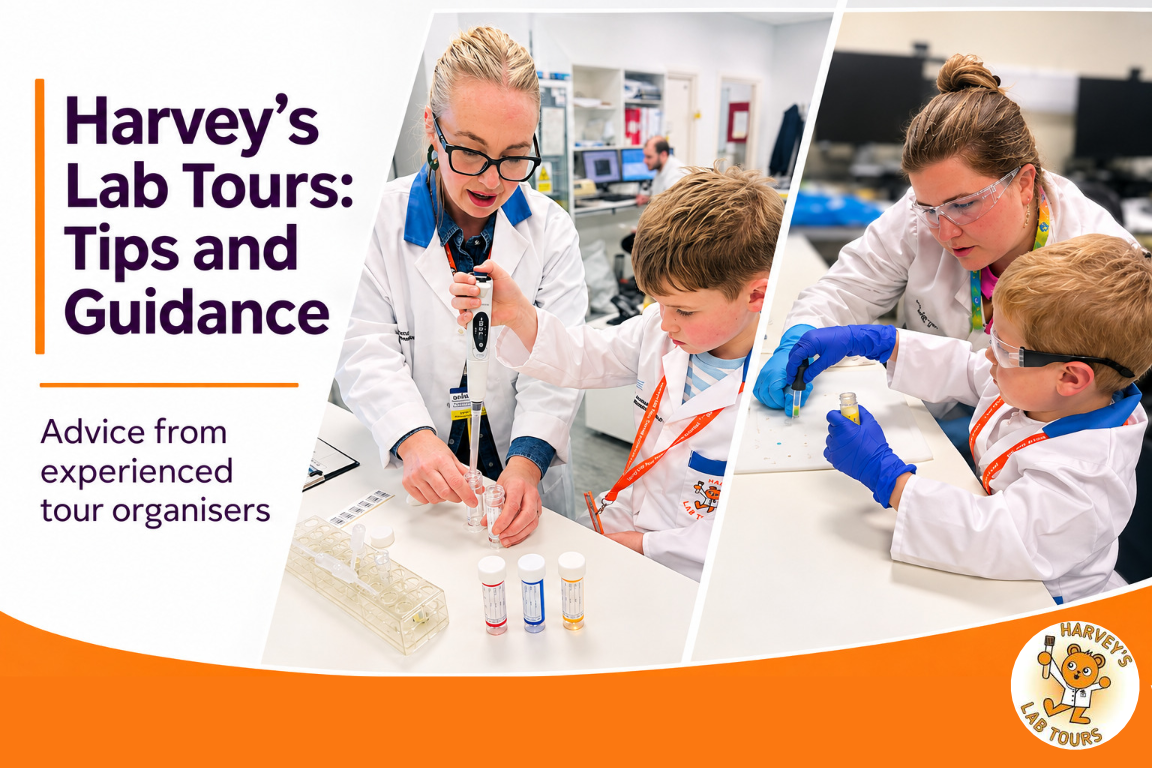
Starting Harvey's Lab Tours at your hospital can feel like a big undertaking, but there is lots of support available.
At our first Harvey's Lab Tours drop-in session, Chloe Aman from University Hospital Southampton and Gayle Johnstone from Dumfries and Galloway Royal Infirmary answered questions from other NHS laboratories signed up to the programme.
Both teams have previously received Harvey's Lab Tour of the Year recognition at the IBMS Awards.
Here, we bring together their advice on getting started, keeping young patients safe and making each visit a positive experience.
How do you get approval to start Harvey's Lab Tours?
Start by speaking to your laboratory manager and senior colleagues to establish whether tours would be possible in your department.
Having a clear plan can help to identify practical challenges early on. Consider which areas of the laboratory could be used, what activities you would offer and how you would keep visitors safe.
Getting colleagues involved early can make a real difference. Support from paediatric clinical teams and other departments can help with planning and delivering tours, so the responsibility doesn't have to sit with one person.
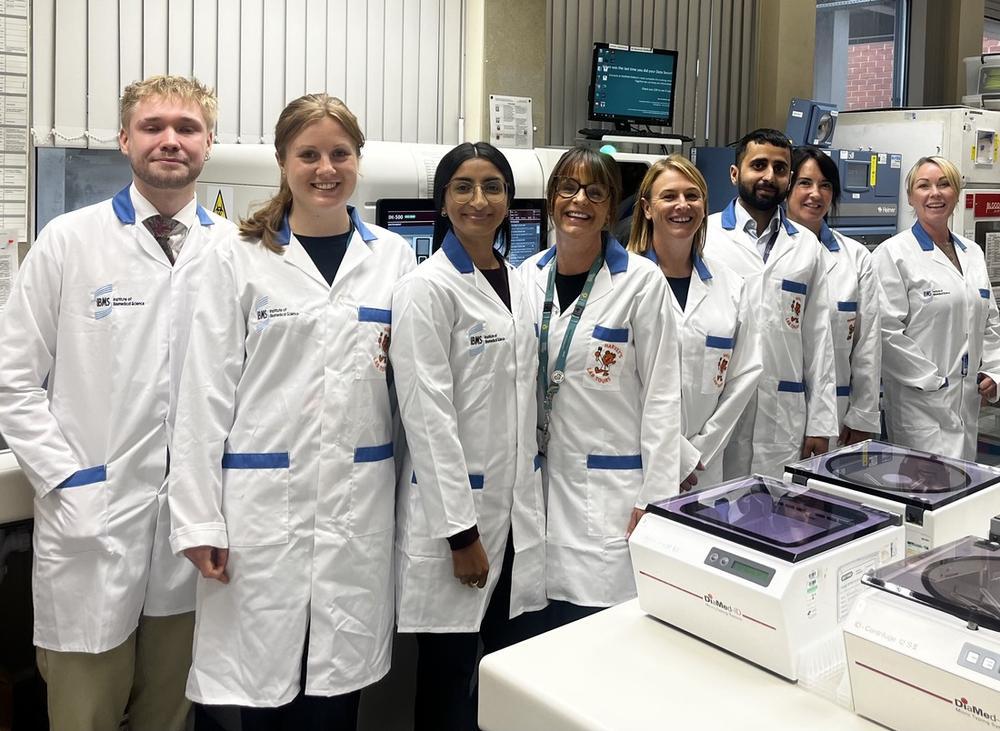
It can also help to demonstrate the benefits of the programme to your hospital's management team. The IBMS provides planning and governance resources, including presentations and examples of successful tours that may support your proposal.
How do you keep young patients safe in a working laboratory?
Having a designated member of staff accompany the young patient and their family throughout the visit can help keep young patients safe in a working laboratory.
At Southampton Hospital, Chloe acts as a chaperone while biomedical scientists in individual departments lead the activities. This allows her to concentrate on the young patient's safety and ensure they only enter areas that have been prepared for visitors.
At Dumfries and Galloway Royal Infirmary, Gayle uses designated activity stations in haematology and biochemistry, keeping visitors away from busy working areas.
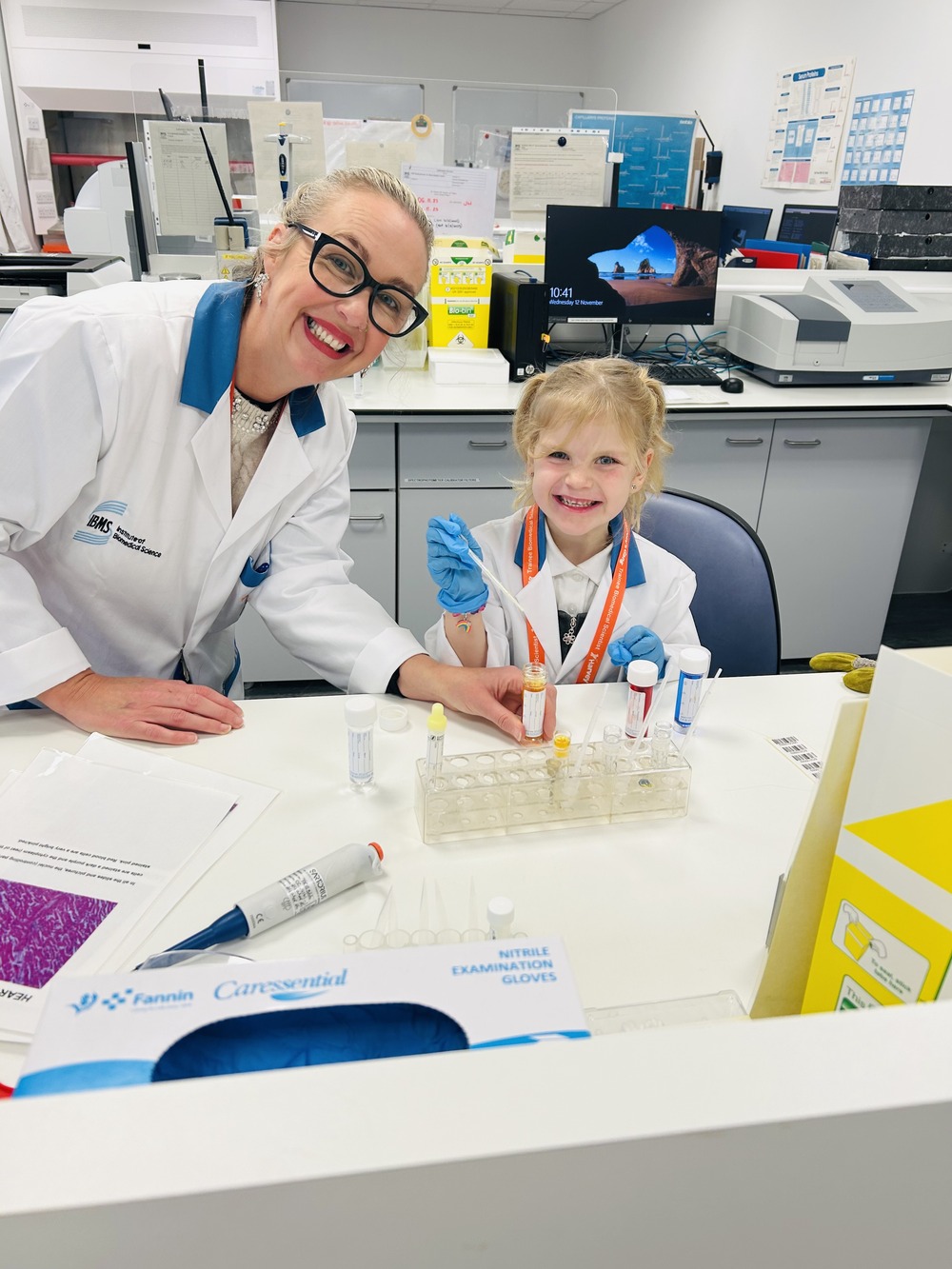
Before entering the laboratory, explain the safety arrangements, including where visitors can go, what they should avoid touching and what to do if they feel unwell or need a break.
How do you protect patient confidentiality?
Visitors should receive a briefing about confidentiality before entering the lab, including the importance of not sharing any patient information they might see.
At Southampton, photographs are taken by a member of staff using a laboratory owned smartphone and reviewed before being shared to ensure no confidential information is visible. This avoids the risks associated with visitors taking their own photos in a working laboratory.
Families should also have time to consider media consent in advance. Gayle sends consent forms before the tour so they can make an informed decision without feeling pressured on the day.
A family can still enjoy a Harvey's Lab Tour even if they do not consent to photographs being shared.
All photography and consent arrangements should follow local hospital policies.
What happens if a young patient becomes upset or overwhelmed?
The most important thing is to respond to the young person's needs rather than feeling that every planned activity must be completed.
If a child becomes uncomfortable, offer to stop the activity, take a break or leave the laboratory. If necessary, the tour can be cut short, with the option of returning another time.
At Southampton, young patients are given a choice before seeing activities that might be unsettling, like looking at blood bags or hearing loud laboratory equipment.
Providing information beforehand can also help. One particularly anxious patient received photos of the staff they would meet, along with an overview of the departments and activities. This helped them feel more prepared for their visit.
At Dumfries and Galloway Royal Infirmary, a pre-tour questionnaire helps the team understand any worries, sensory needs or particular interests before the day.
Should tours be organised for individual children or groups?
Organising tours for one family at a time can make it easier to tailor activities to the young patient's medical history, interests and questions.
For example, Chloe has adapted tours for patients with haemophilia A by including a visit to coagulation, where they met the biomedical scientists involved in processing their samples.
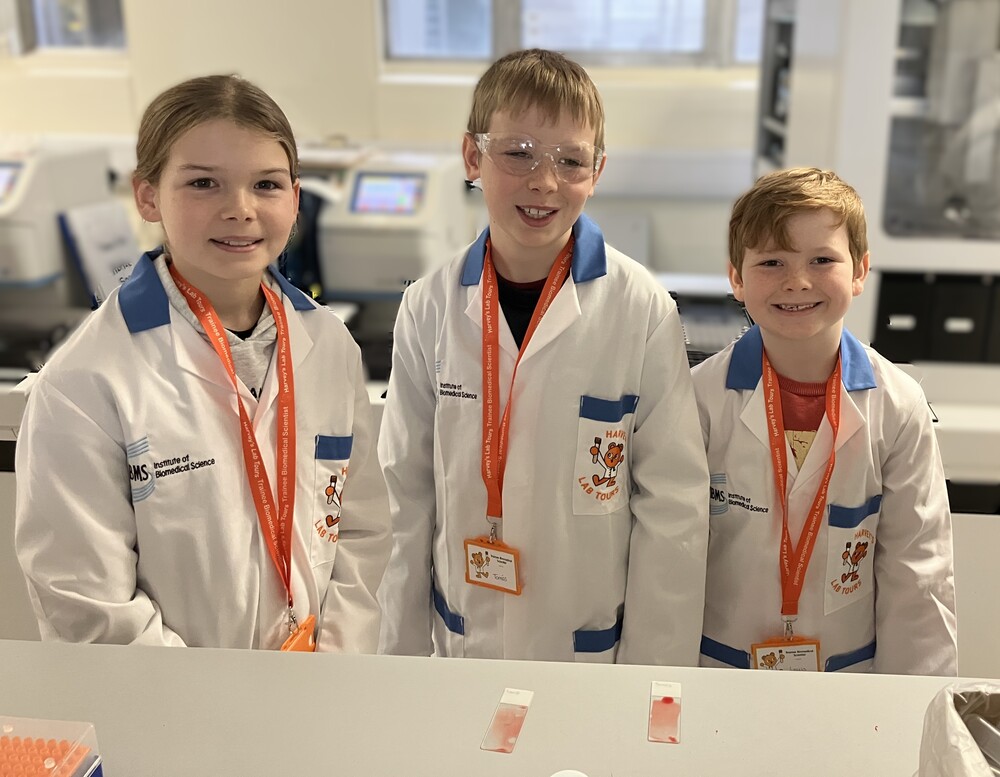
Siblings can also be included in the visit. This helps the wider family understand more about the young patient's healthcare.
How can you adapt a tour for a child who is anxious about needles?
Harvey's Lab Tours are not focused on the process of taking blood, but rather what happens to a sample after it reaches the laboratory.
It is valuable to explain this distinction clearly to young patients before their tour begins.
Understanding where their samples go, who processes them and why the tests are important may help children feel more comfortable about future appointments.
Activities should be adapted to the child's needs, without putting pressure on them to have a blood test.
For young patients who aren't ready to have their blood taken during their tour, a return visit can be arranged after a future blood test so they can follow their sample's journey through the laboratory. Where appropriate, they may also be able to see their own blood cells under a microscope after a sample has been taken.
How do you adapt tours for older teenagers?
Start by finding out what the young person already knows and what they would like to learn.
For older teenagers, activities can build on the science they have studied at school or college, with more time for detailed explanations of laboratory processes.
However, don't assume that older patients will be less interested in hands-on activities. Both teams have found that teenagers often enjoy modelling blood cells with Play-Doh and conducting simple experiments.
Tours can also be an opportunity to discuss careers in biomedical science.
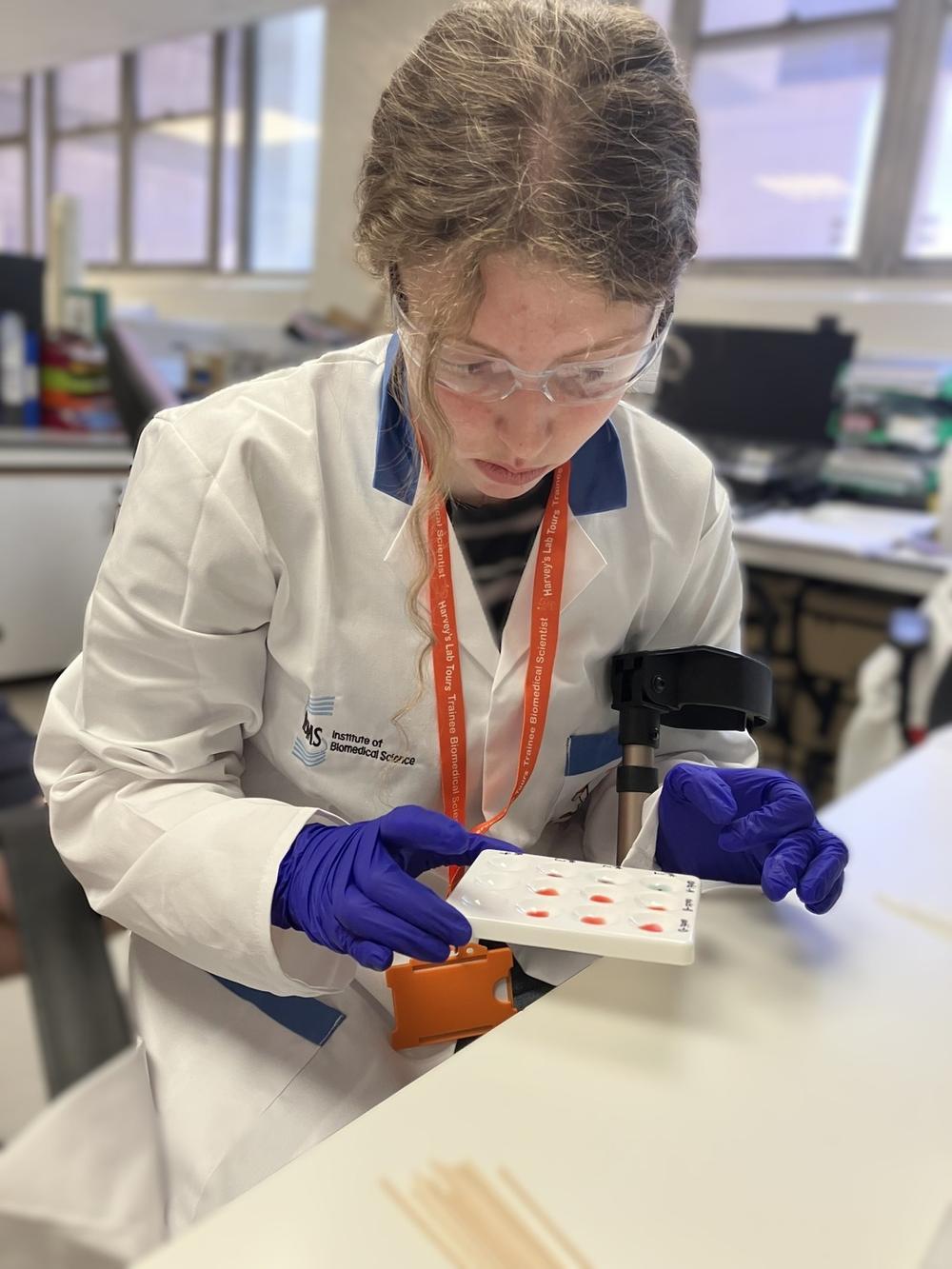
At Southampton, Chloe supported a 17 year old patient interested in the profession by explaining IBMS-accredited degrees, apprenticeships and possible career pathways.
What activities work well during a tour?
Activities don't need to be complicated or expensive to help young patients understand biomedical science.
There are several activities that laboratories could adapt to their own facilities:
Mock sample processing
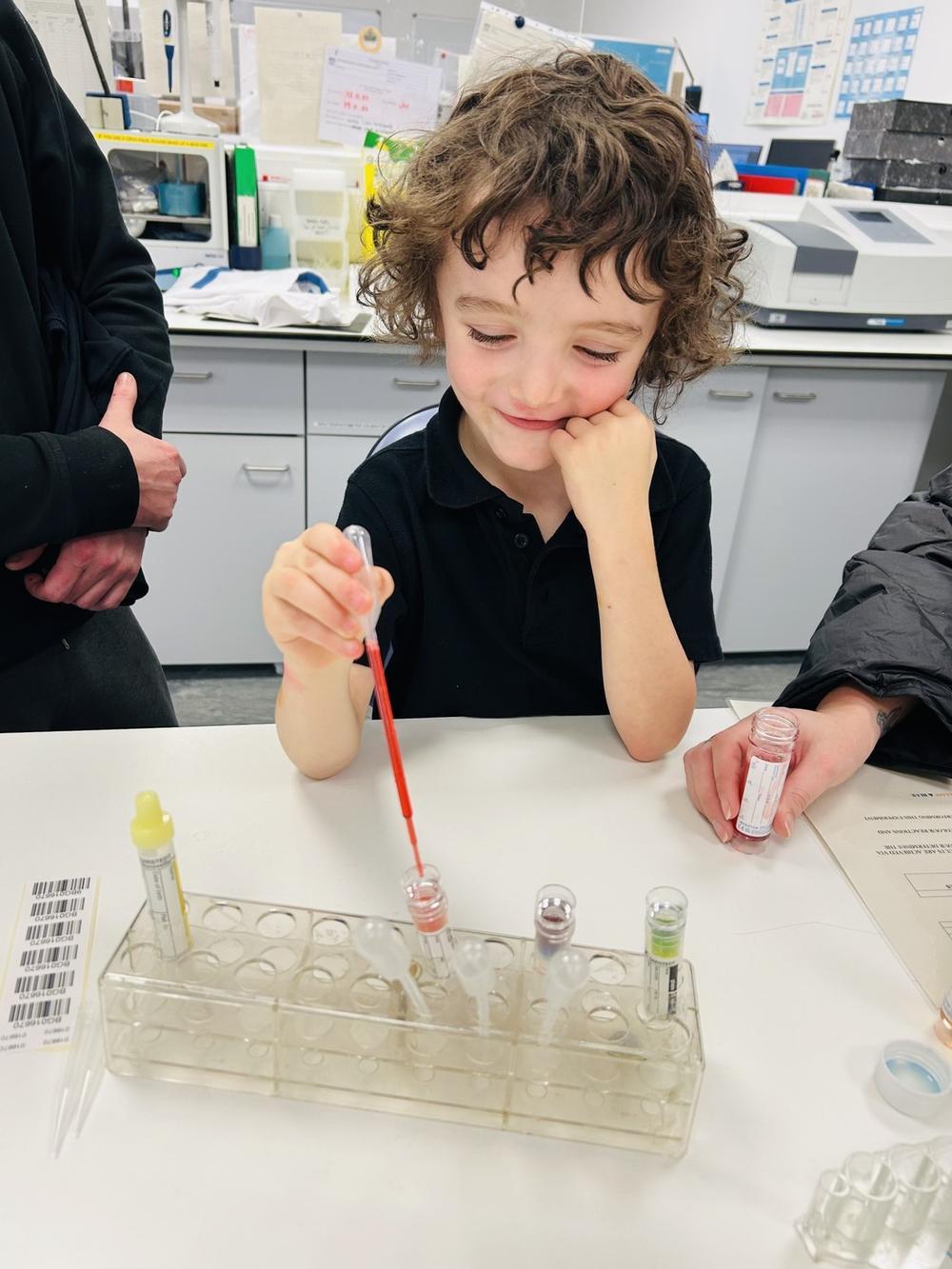
At Dumfries and Galloway Royal Infirmary, young patients can work with mock samples made using food colouring and water. These can be given barcodes and processed through suitable laboratory equipment to demonstrate part of a sample's journey.
Pipetting
Young patients can follow a simplified standard operating procedure and practise transferring liquids using safe materials.
Colour change experiments
At Southampton, the team demonstrates how a reagent produces different colour reactions in tap water and deionised water, helping explain how analysers measure substances in samples.
Paper chromatography
Using washable felt-tip pens, filter paper and water, children can observe how different colours separate.
Microscopy and blood films
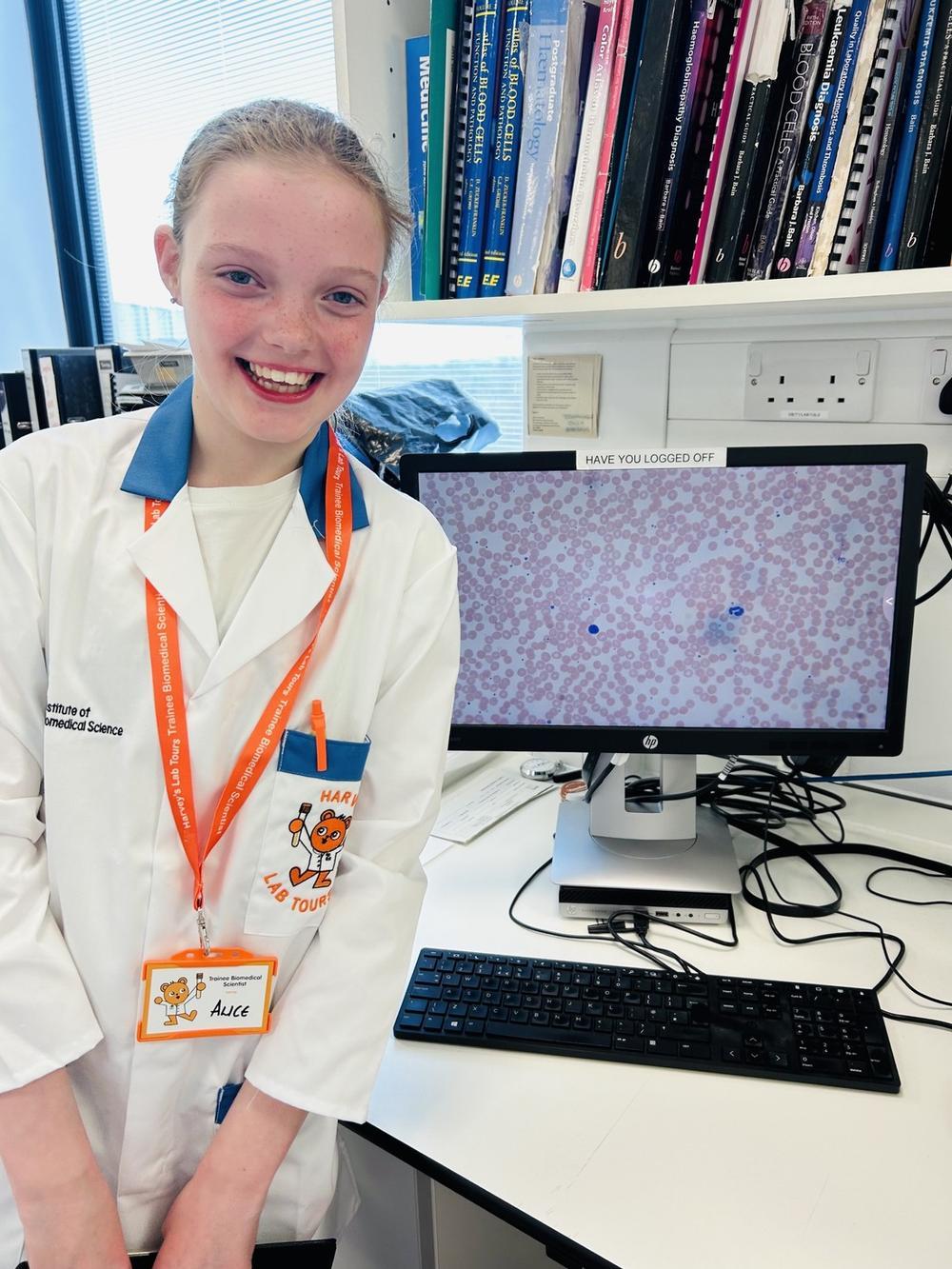
Where appropriate, young patients may be able to examine their own blood cells under a microscope. At Southampton, some patients can also prepare a blood film using their own sample under appropriate supervision.
All activities should be risk assessed, suitable for the laboratory and supervised appropriately. Young patients should not handle other patients' samples.
What advice would you give to a laboratory starting its first tour?
Make use of the resources and experiences shared by other Harvey's Lab Tours sites.
At Dumfries and Galloway Royal Infirmary, careful planning and activities adapted to the available facilities have helped the team build a programme that has been running since 2019.
Southampton's approach also shows us the importance of practical arrangements, including which staff members will lead activities, what visitors can safely access and how volunteer time will be organised.
There is no single way to run a Harvey's Lab Tour. Every laboratory has different facilities and staffing arrangements, and teams can develop an approach that works for their department and the young patients they support.
Further support and upcoming drop-in sessions
The Harvey's Lab Tours team provides resources and advice to laboratories interested in joining the programme, as well as existing sites looking to develop their activities.
Our online drop-in sessions offer an opportunity to ask questions, hear from experienced organisers and share ideas with other laboratories.
The next Harvey's Lab Tours drop-in session takes place on Thursday 26th November 2026.
Book your place to hear more advice from experienced tour organisers and ask questions about delivering Harvey's Lab Tours at your hospital. You can also submit questions when registering to help shape the discussion.
Visit the Harvey's Lab Tours resources section or contact [email protected] for more information.
We also welcome feedback, photographs and activity ideas from existing sites. Sharing your experiences helps other laboratories develop their own tours and supports the continued growth of the programme.