Hannah Scholes: a career in outreach
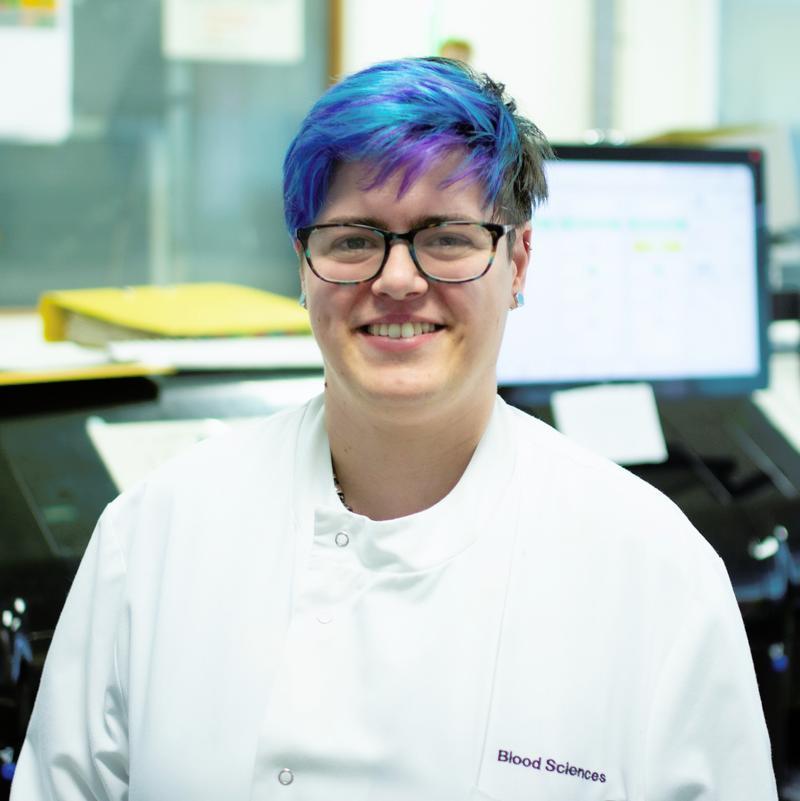
When Hannah Scholes walks into a school or outreach event, she brings more than just hard facts with her. Her striking blue hair and a tie-dyed rainbow lab coat make her stand out right away, helping younger visitors see science as something fun and engaging.
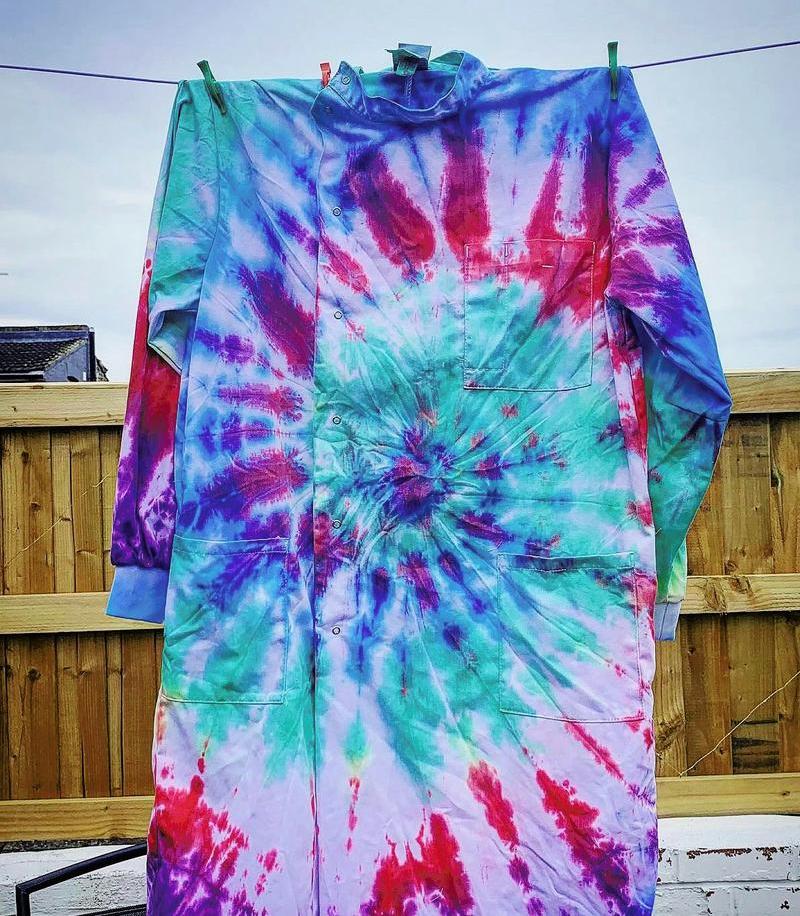
Hannah's infamous tie-dyed rainbow lab coat
Hannah is a HCPC-registered Specialist Biomedical Scientist in Haematology and Blood Transfusion at East Kent Hospitals University NHS Foundation Trust, where she works in blood sciences. She also volunteers as a STEM Ambassador and Healthcare Science Ambassador alongside her clinical role, running outreach sessions that introduce children and young people to the exciting world of biomedical science.
With over 100 hours volunteering under her belt, outreach work is about more than just an occasional school visit for Hannah. It is about showing young people that science is for them, and that biomedical science has a place in that picture too.
I just love getting out there and seeing how excited everybody gets about it.
It’s the smiles and the laughter that make it all worth it.
- Hannah Scholes
The long way round
Hannah describes her route into biomedical science as “the long way round”.
After studying biological sciences at university, she began her career in diagnostic research and development with a pharmaceutical company, working in laboratories where problem solving was part of daily life. When the site closed, she moved into the NHS through a role in sample reception at Queen Elizabeth the Queen Mother Hospital in Margate.
Watching biomedical scientists at work, it was there that that something clicked for Hannah.
I stayed in that for about six months and then saw what the biomedical scientists were doing and I was like, ‘I want to do that. Can I do that? How do I do that?’
After contacting the IBMS, finishing her top-up modules and securing a trainee post, Hannah progressed into biomedical science and has since completed her Specialist Diploma in Haematology with Transfusion Science Practice.
Now working primarily in haematology and blood transfusion (and cross trained to support chemistry out of hours), she uses her cross-discipline experience to support both her clinical work and outreach.
Making science visible
Hannah’s passion for outreach has deep roots. She’s been involved in Girlguiding since she was five and now runs her own Brownie unit. She also recognises the impact that school science events had on her as a child.
She remembers sessions involving exploding custard, screaming jelly babies and chromatography activities that made science feel alive. But one thing stayed with her: most of what she saw was centred on chemistry or physics.
Looking back, she realised there had been far less that focused on biology in the same way.
I just thought, could I do something like that, but for biomed or biology? If we don't get young people interested in science in the first place, you're not going to end up with anybody doing what we do.
That idea now sits at the heart of Hannah’s outreach. Her sessions are made to be interactive, energetic and easy to connect with, especially for younger audiences.
Lots of colour, lots of noise. If you can find something that gets them moving and running around, it’s always good.
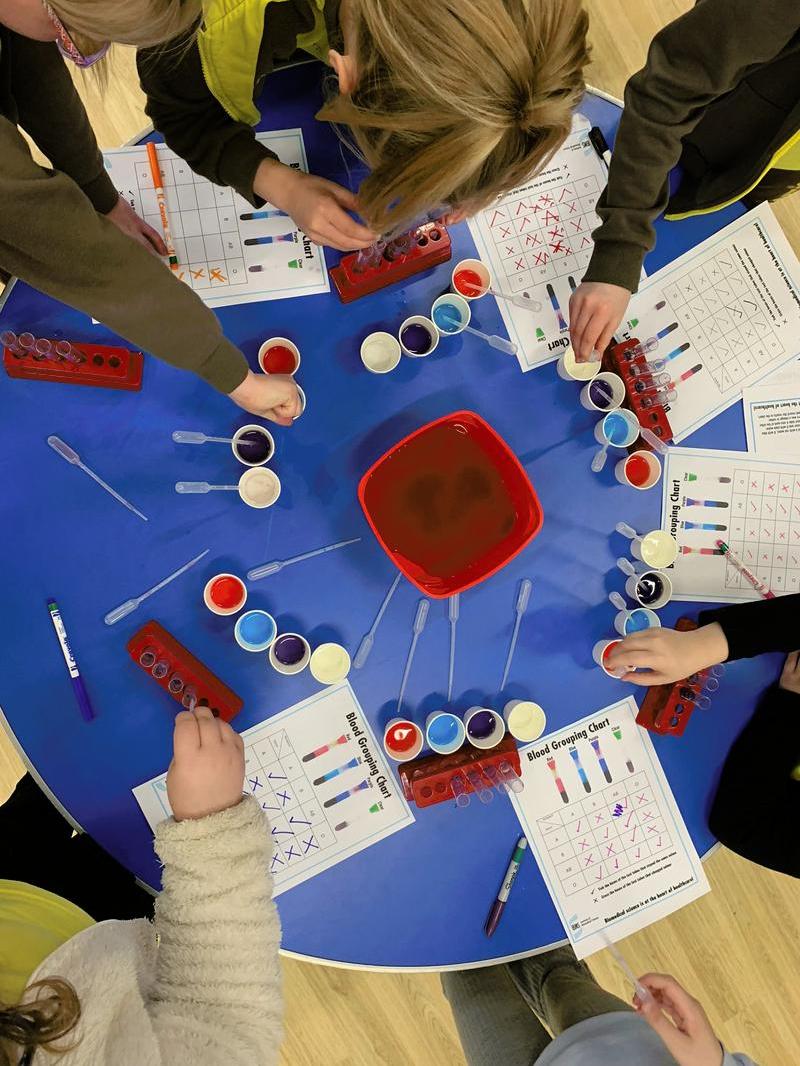
Blood grouping exercise with food colouring
Hannah is lucky to have a brownie unit that she can try out activities with first. But she’s always adaptable, and aware that things may not go quite to plan on the day.
If it works, great. If it doesn't, maybe tweak it a little bit or go, actually, that's not going to work at all. That was a disaster! But yeah, that's the fun of it really.
Turning complex science into something real
One of Hannah’s strengths is the way she translates biomedical science into terms children can understand.
Rather than starting with technical details, she begins with something familiar (like a blood test) and builds from there.
They don’t know what’s involved in a full blood count, but they do know somebody that might have had a blood test done. So you sort of go, ‘OK, have you ever had a blood test done?’
From there, she explains the role of biomedical scientists in simple, relatable terms.
The doctors are trying to put together a puzzle as to what’s wrong with you, and we’re the ones that give them the missing puzzle pieces.
That approach runs through the activities she has developed and adapted over time. Some involve microscopes, pipetting and DNA extraction. Others use role play, movement and props to explain how the body works.
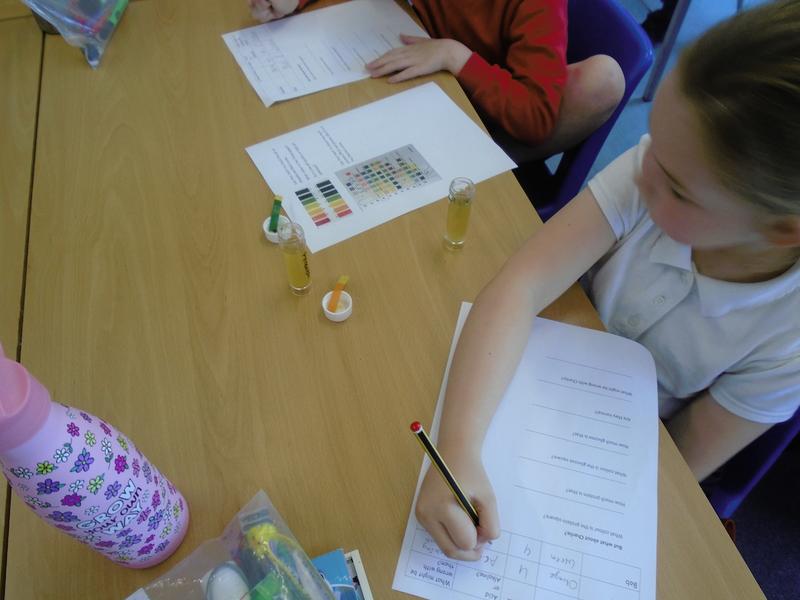
Chamomile tea "urine" experiment with dipstick testing
One of her favourites is a game that turns children into components of the circulatory system. Red cells collect oxygen, white cells chase down “germs”, and platelets work together to plug a wound represented by a hula hoop. It is fun, slightly chaotic and, by all accounts, very effective.
She also uses fake blood bags made with coloured water to talk about transfusion, and practical activities to help children understand what happens to samples once they leave the patient and arrive in the lab.
The aim isn’t to overload younger audiences with detail, but to make biomedical science feel tangible.
It’s fantastic to see the "lightbulb moment" when something clicks - you can see when someone understands something they might have been struggling with before.
Science communication in practice
For Hannah, outreach is also a great way of sharpening her own communication skills.
It’s essentially a crash course in science communication. If you can explain your job to a seven-year-old in a way that they understand, it means you understand it as well.
That has become a key part of why she encourages others to get involved. Along with as her in-person outreach, Hannah also takes part in initiatives such as STEM Ambassadors and I’m a Scientist, Get Me Out of Here, where school students can ask scientists questions in moderated online chat rooms.
The questions range from the highly technical to the wonderfully unpredictable, but all of them help make science feel more human and more reachable.
It’s breaking the stereotype of the mad scientist in a tower with their laser beam, death ray or whatever. Showing them that we are normal people.
Why it matters
At a time when many people still have little idea what happens behind the laboratory doors, outreach like Hannah’s plays an important role in raising awareness of the profession.
It also helps create opportunities for future biomedical scientists, including those who may not yet know that a career like this exists.
For Hannah, that is reason enough to keep saying yes to school visits, ambassador opportunities and outreach ideas, even while balancing them around a busy working life in the lab.
Science isn’t boring. It’s not boring, and it doesn’t have to be boring.
Her outreach work continues to grow. In June, Hannah will also be using the IBMS Learning Laboratory vehicle to support her sessions, helping bring hands-on biomedical science activities to even more young people.
By making science understandable and fun, Hannah is helping to shift how biomedical science is seen. For the children she meets, it turns it into something they can recognise, relate to and, potentially, see themselves doing one day.
And in a profession that so often works behind closed doors, that connection can make all the difference.
Do you have a story to share from your work in biomedical science?
We’re always keen to hear from those working across biomedical science. If you’d like to share your story, please get in touch at [email protected]