IBMS Fellow recognised with MBE
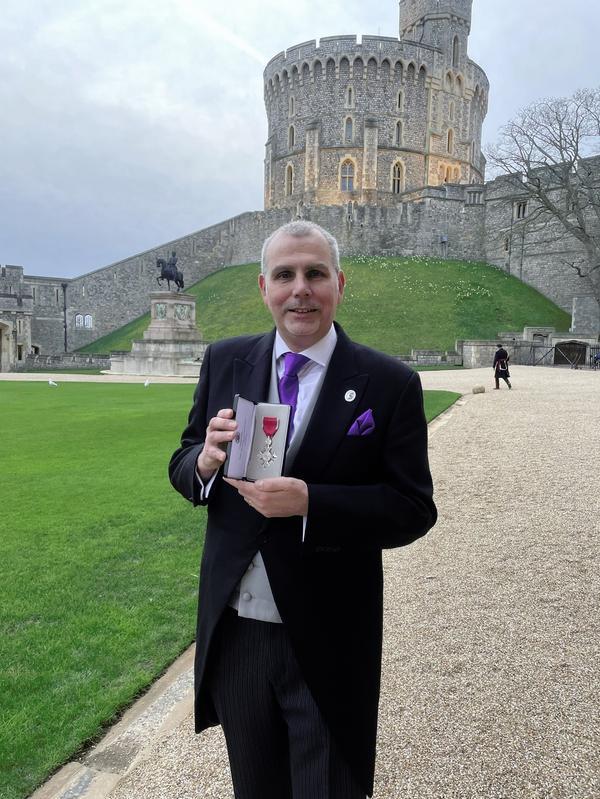
His investiture at Windsor Castle is not only a significant personal achievement, but national recognition of the vital role biomedical science plays in healthcare and the importance of expanding access to the profession through education routes such as degree apprenticeships.
We spoke to Ian about the moment he found out, the day at Windsor Castle, and what this honour means for the future of biomedical science.
Can you take us back to the moment you found out you were being awarded an MBE? What was your initial reaction?
“Disbelief! I couldn’t imagine this in my wildest dreams and so it took a long time to sink in (in fact, I still have trouble believing it at times). After the initial disbelief the resounding feeling is of pride – pride that my work has had such an impact for people to take the trouble to put together a nomination and for that to have enough merit to make it through such a rigorous approval process.”
What did it mean to you to receive your MBE at Windsor Castle from HRH The Princess Royal?
“Windsor Castle is an amazing place and the investiture was beautifully choreographed to put everyone at ease. The Princess Royal showed a genuine interest in my work, talking for several minutes about the role of biomedical science in healthcare and the importance of alternative methods of accessing higher education. I’ve been fortunate to meet Her Royal Highness previously and know that she has a real interest in STEM careers and education; this was clear in our conversation as we spoke about the benefits of a diverse workforce and how healthcare benefits from that diversity.”
You have been a strong advocate for degree apprenticeships and widening participation. Why are these routes so important for the future of biomedical science?
“We all have different journeys and all face different challenges at different times. Career paths can take so many forms now and having a biomedical science workforce with a variety of life experiences and backgrounds can only develop pathology services by by ensuring a diversity of voices that reflect the patients we serve. Degree apprenticeships play a vital role here, providing opportunities to develop talented people who may not be able to access higher education in traditional ways and bring their experiences and skills to the table.”
You spoke about your family and the mixed emotions surrounding the day. What did it mean to share it with them?
“It was an emotional day; I lost my Dad in 2024 and can only imagine the pride he would have had in this achievement. My Mom also has quite advanced dementia – I told her just before the official announcement and the smile on her face will always stay with me. I am absolutely reliant on the constant support of my wife and daughter and so to have them able to share the day with me gave me such strength.”
You’ve said this award is shared with colleagues and students who have supported your journey. Is there anything you’d like to say to them directly through this feature?
“I’ve always said that not an ounce of my success is a solo endeavour. I’ve been privileged to have leaders who have encouraged me to think differently and have supported me to push practice forward. I work with a fantastic group of colleagues at the University of Staffordshire who work so collaboratively, alongside brilliant training officers and practice educators across pathology laboratories who give their time and experience to support the next generation of biomedical scientists. Most of all, I learn something new from each student I meet and it is a genuine privilege to be part of their individual journeys. All of these share in this award.”
Looking back over your career, what moments stand out as defining or impactful?
“The move from practitioner to academia was a difficult decision, but I always felt I could contribute more to the profession and our service users by developing the next generation of innovative and agile biomedical scientists. Our first cohort of apprentices graduated just after COVID, having completed their degrees whilst working on the front line during the pandemic - they were the pioneers of the course and I remember being in tears all the way through their graduation. For me, that was a defining moment; seeing their resilience and success and knowing we had built something really special.”
Finally, what advice would you give to aspiring biomedical scientists, particularly those considering alternative routes such as degree apprenticeships?
“Biomedical Science is a wonderful career and now more than ever there are opportunities to push forward practice and take on different roles. I’d encourage all students and scientists to always remember their ‘why’; the things that give them purpose and use this to drive forward innovation - there will always be challenges, but find role models and become role models for others.”
The IBMS congratulates Ian on this national recognition and thanks him for his commitment to widening participation and strengthening the biomedical science workforce.