Plague and the role of biomedical scientists
Recent reports surrounding the death of a laboratory scientist in Irkutsk, Russia, have raised concerns about a possible infection with Yersinia pestis, the bacterium responsible for plague. Although the cause of death remains unconfirmed, the incident is a reminder that plague is not simply a disease from the history books.
IBMS President Dr Sarah Pitt explores the continuing global impact of plague, the science behind Yersinia infections and the important role of biomedical scientists in their diagnosis and management.
Understanding Yersinia infections
Bacteria belonging to the genus Yersinia are Gram-negative coccobacilli, named after Alexandre Yersin, who discovered the plague bacterium in the 1890s.
Three species are particularly significant in human medicine: Yersinia pestis, Yersinia enterocolitica and Yersinia pseudotuberculosis.
All three cause zoonotic infections, meaning they can spread between animals and humans, although their primary animal hosts differ. Y. pestis is naturally found in certain rodents, while Y. pseudotuberculosis is associated with rodents, other small mammals and some birds. The main reservoir for Y. enterocolitica is the domestic pig.
While Y. pestis causes plague, the other two species are associated with gastrointestinal infections, which can be acquired through contaminated food, unpasteurised milk and water.
In the UK, most laboratory-confirmed cases of yersiniosis are caused by Y. enterocolitica. Reported incidence has been rising in recent years, with between 1,000 and 1,500 cases reported annually (UKHSA; Public Health Scotland).
Plague remains a global health concern
Plague is most commonly transmitted to humans through the bite of an infected flea, particularly the Oriental rat flea (Xenopsylla cheopis).
In Europe, plague is often associated with the Black Death of the 14th century, which is estimated to have killed tens of millions of people.
Although it has not been transmitted within the UK for over 100 years, the disease is still found in Africa, Asia, Russia, North and South America. The Democratic Republic of the Congo and Madagascar continue to experience endemic transmission.
According to the World Health Organization (WHO), 3,847 suspected cases and 423 deaths were reported across 10 countries between 2019 and 2025. The true number of infections may be higher because of underdiagnosis and underreporting
Recognising the different forms of plague
The incubation period for plague is usually less than a week, although symptoms can develop rapidly.
There are three main clinical forms of the disease.
- Bubonic plague is the most common form. Following an infected flea bite, the bacteria travel to nearby lymph nodes, causing painful inflammation and swelling known as buboes. These may develop in the neck, armpits or groin. Patients can also experience fever, chills, nausea and vomiting.
- Septicaemic plague occurs when the infection affects the bloodstream. It can lead to rapid deterioration, shock, disseminated intravascular coagulation and multiple organ failure.
- Pneumonic plague affects the lungs and can develop following the spread of infection or through inhalation of infectious respiratory particles. Symptoms include breathing difficulties, chest pain and coughing, sometimes with blood-stained sputum.
Pneumonic plague is particularly concerning because it can spread directly between people through close contact and coughing, potentially leading to outbreaks
Without prompt diagnosis and appropriate treatment, all forms of plague can be fatal.
The role of biomedical scientists in diagnosis
Accurate and timely laboratory diagnosis is essential for identifying Yersinia infections and supporting effective treatment.
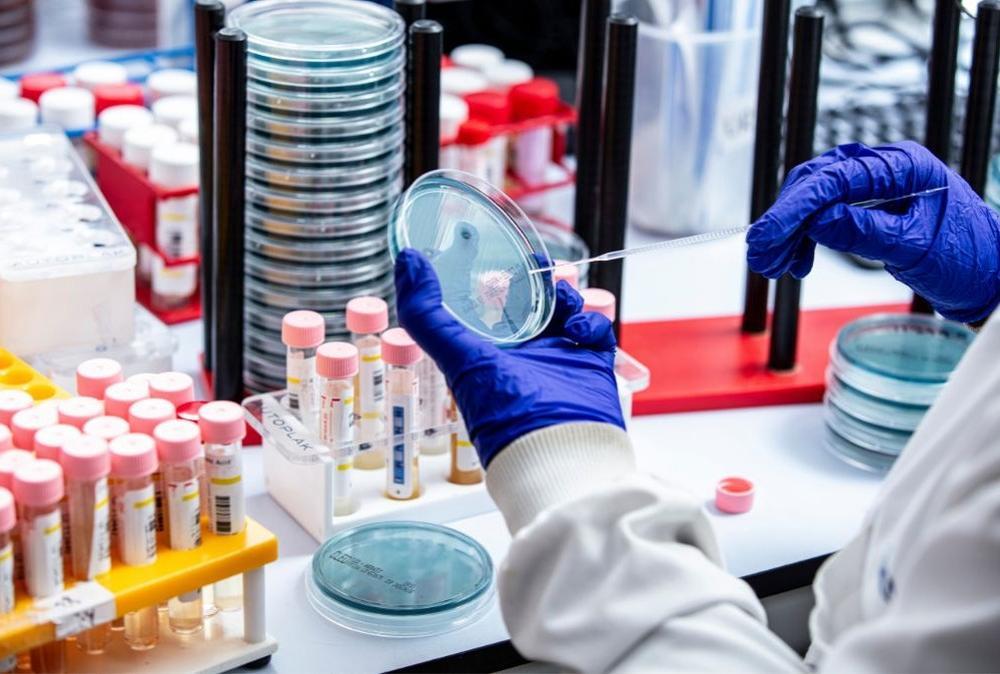
Microbiology biomedical scientists play an important role in recognising these organisms, carrying out diagnostic investigations and ensuring that suspected infections are managed appropriately.
Yersinia species can be cultured from patient samples such as faeces, blood, buboes, lymph node biopsies. This uses established microbiological techniques and growth on standard agars such as nutrient and blood agar. For suspected gastrointestinal infections, samples may be cultured on selective media such as cefsulodin-Irgasan-novobiocin (CIN) agar, which suppresses competing organisms and supports the isolation of Yersinia.
Further identification may involve matrix-assisted laser desorption/ionisation time-of-flight mass spectrometry (MALDI-TOF MS) and molecular techniques such as polymerase chain reaction (PCR), alongside other validated laboratory methods.
Although Y. pestis can grow on blood agar, it is classified as a Hazard Group 3 pathogen, meaning that suspected samples require specific safety precautions and appropriate containment. This includes specialist containment procedures and protective equipment to minimise the risk of exposure to laboratory staff.
In the UK, suspected plague cases require urgent specialist assessment. The UK Health Security Agency's Imported Fever Service coordinates advice and, where indicated, diagnostic testing through the Rare and Imported Pathogens Laboratory at Porton Down.
Rapid diagnostic methods, including antigen detection tests, have also supported outbreak responses in countries where plague remains endemic.
Early diagnosis supports effective treatment
Plague can be treated with antibiotics, including ciprofloxacin, gentamicin and streptomycin.
However, treatment must begin as early as possible. Where plague is strongly suspected, antibiotic treatment should not be delayed while awaiting laboratory confirmation.
This makes effective communication between clinical teams, microbiology laboratories and public health services essential.
The work of biomedical scientists contributes to this process by supporting the accurate identification of pathogens, informing clinical decisions and helping to monitor the spread of infection.
Recognising biomedical scientists worldwide
For people living in the UK, the risk of contracting plague remains extremely low. However, in countries where the disease is endemic, laboratory professionals continue to play a crucial role in its detection, diagnosis and surveillance.
The recent reports from Russia offer an opportunity to recognise the biomedical scientists and laboratory professionals around the world whose expertise helps identify dangerous pathogens, support patient care and protect public health.
Their work is essential to ensuring that infections such as plague are recognised quickly and managed effectively.
Further resources

For further reading on the history of plague, explore The big story: tales of the plague, published in The Biomedical Scientist.