Freya’s Lab Tour at Sheffield Children’s Hospital
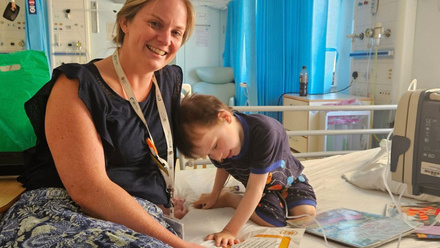
Freya has Diamond-Blackfan anaemia, a rare condition in which the bone marrow does not produce enough red blood cells. During her tour, she learned more about the laboratory tests used to help monitor her condition and met some of the team behind them.
Freya and her Mum and Dad have also published a book, Freya and Diamond Blackfan Anaemia: The Rare Disease Club, to help other children and families understand the condition.

Testing in the laboratory
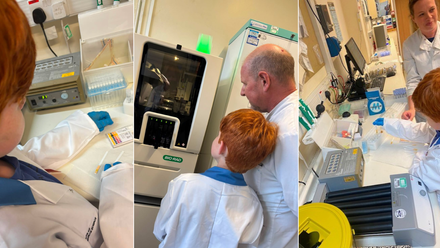
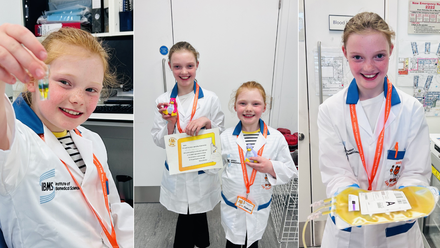
After putting on her lab coat and seeing the pneumatic pod system at work, Freya collected a sample and used the laboratory’s booking in system to request her first full blood count.
With a helping hand from Mum and the team, Freya ran the test and watched the sample travel through the analyser. She learned how white blood cells are counted using flow cytometry and how laboratory testing helps healthcare professionals understand what is happening inside the body.
The experience led to plenty of questions from Freya about the different blood cells and how each stage of testing contributes to the final result.
Putting cells under the microscope
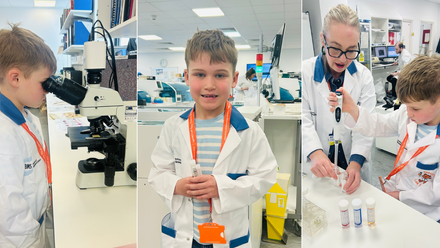
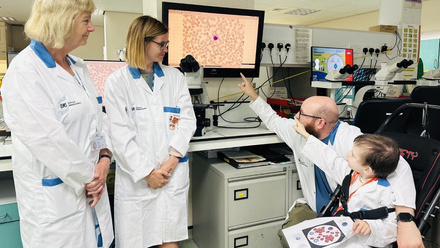
The microscope session was a highlight for Freya.
After learning about red blood cells during the full blood count, she put her new knowledge to the test by using Play-Doh to create different cell morphologies.
Despite it being her first visit to a lab, she quickly became confident at spotting cells under the microscope and identifying neutrophils, platelets and red blood cells.
Creating a clot
Next, Freya visited the coagulation section, where she created her own ‘slime clot’, using beads to represent white blood cells, red blood cells and platelets.
The activity helped her explore how clots form and what can happen when parts of the clotting cascade do not work as expected or certain clotting factors are missing.
Examining blood groups
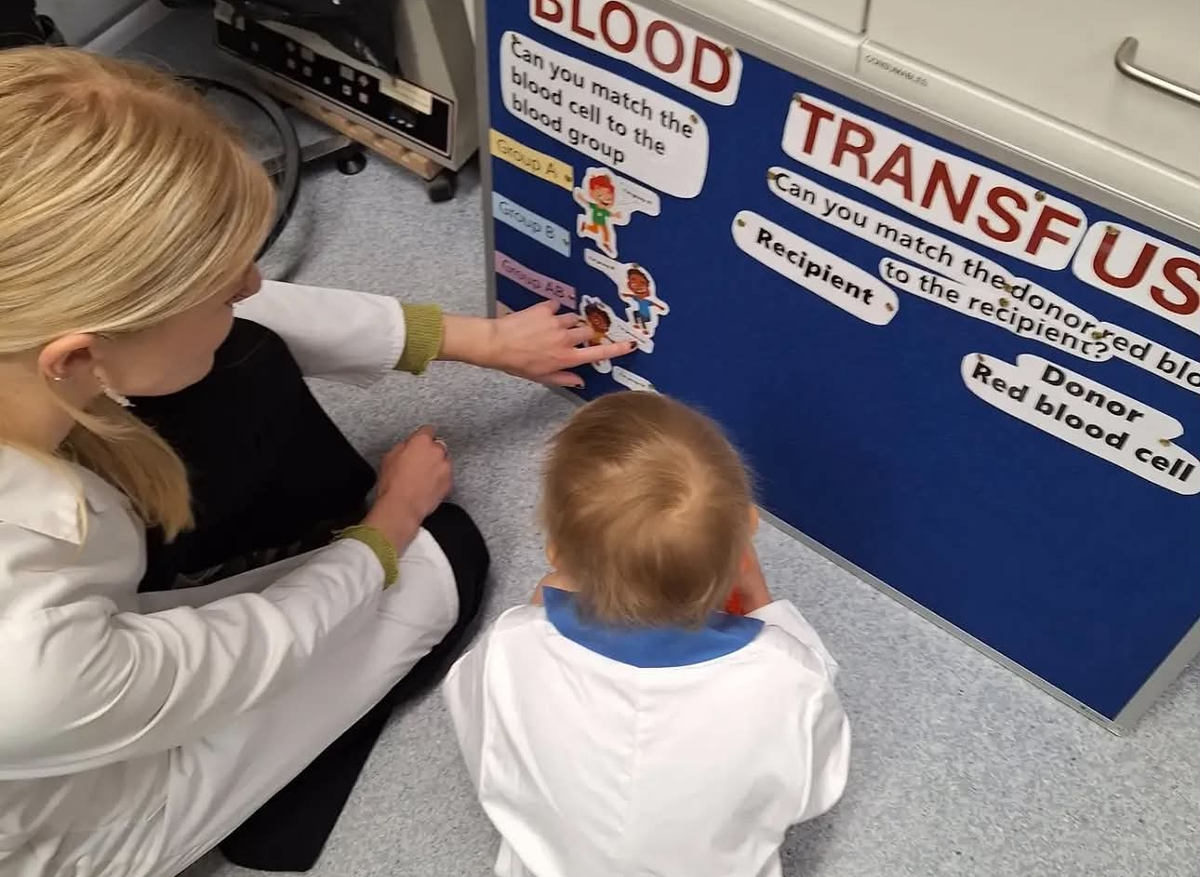
Freya learns about blood groups and transfusions
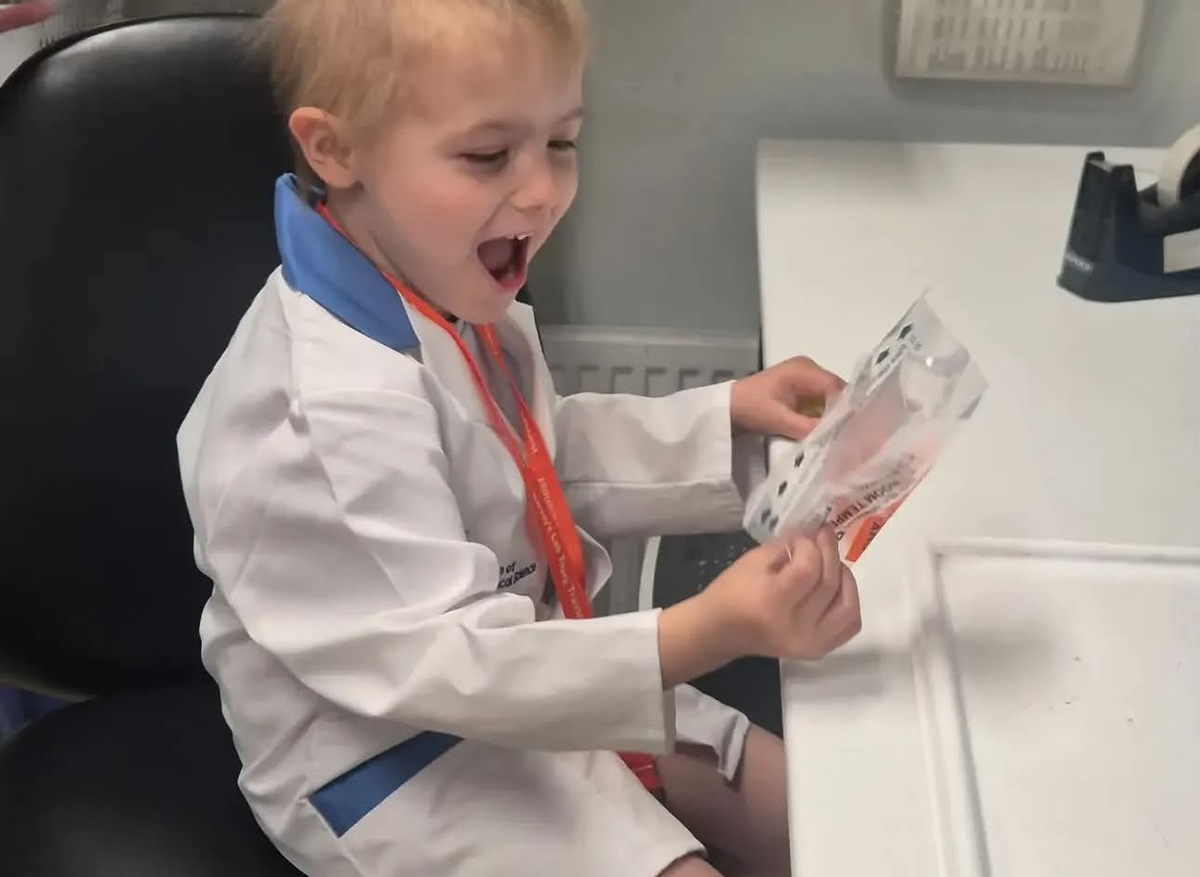
Looking at blood components
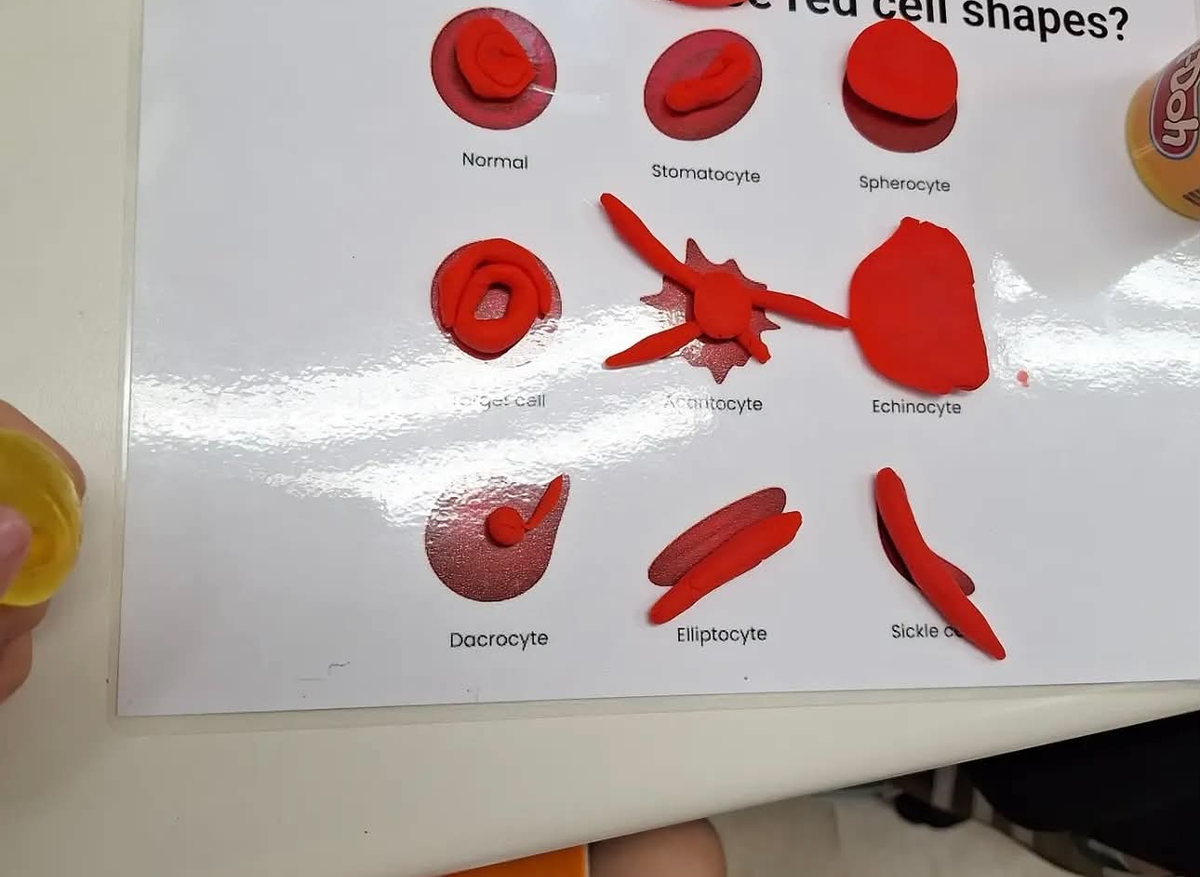
Using Play-Doh to recreate different red blood cell shapes
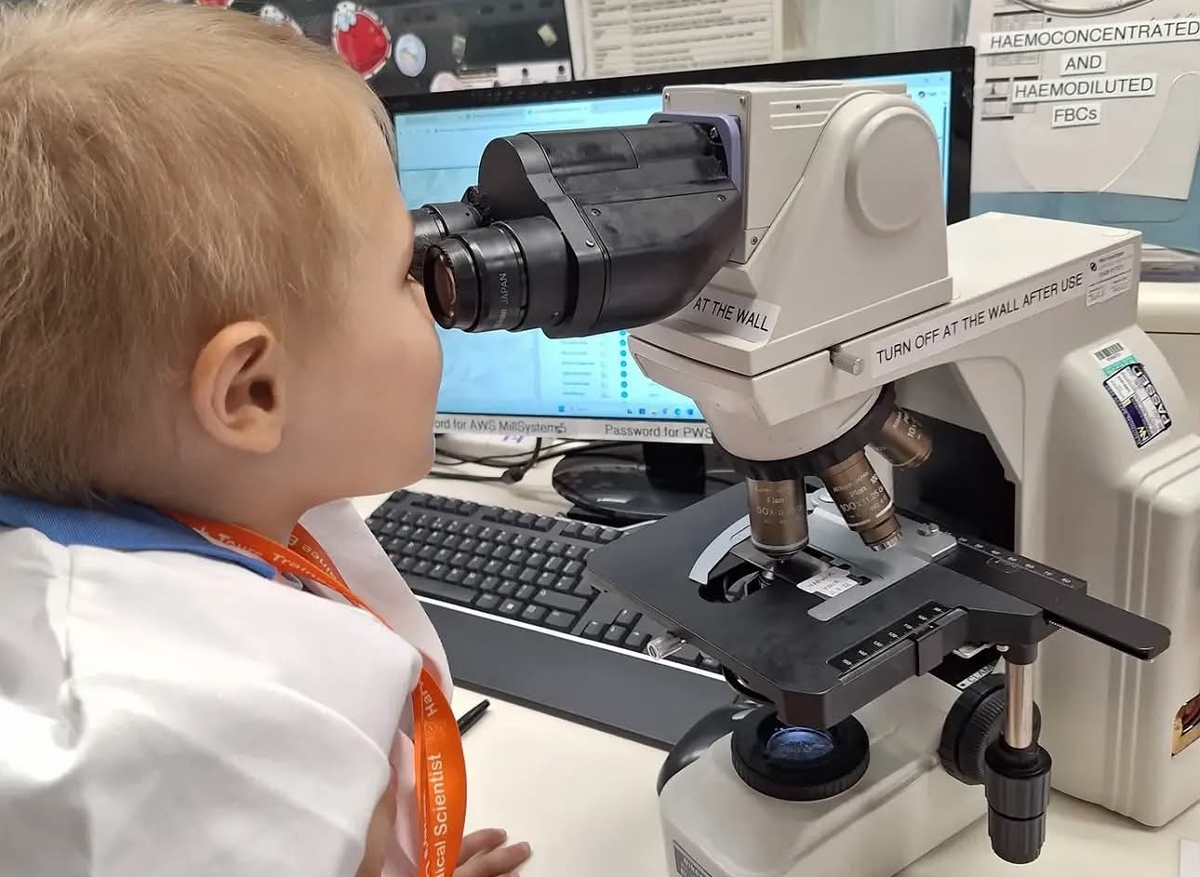
Examining blood cells under the microscope
Freya finished her tour in the blood bank, where she witnessed the science behind blood grouping and got to hold bags of platelets and red blood cells.
Using an interactive matching activity, Freya paired pretend blood donors with patients and learned why getting the right match matters. The activity provided a child-friendly introduction to blood groups, compatibility and antibodies, while putting everything she had learned during the day to the test.
By the end of her visit, Freya had followed laboratory testing through several different areas and gained a better understanding of the science behind her own blood samples.
After such an impressive first day in the laboratory, the Junior Scientist title definitely belongs to Freya.
Do you have a story to share from your Harvey’s Lab Tour?
We’re always keen to hear about lab visits and experiences. If you’d like to share your story, please get in touch at [email protected]