Sarah Pitt on leadership in science
It is also a chance to reflect on the importance of encouraging more girls into STEM careers, making sure women working in scientific professions are supported to lead and be visible.
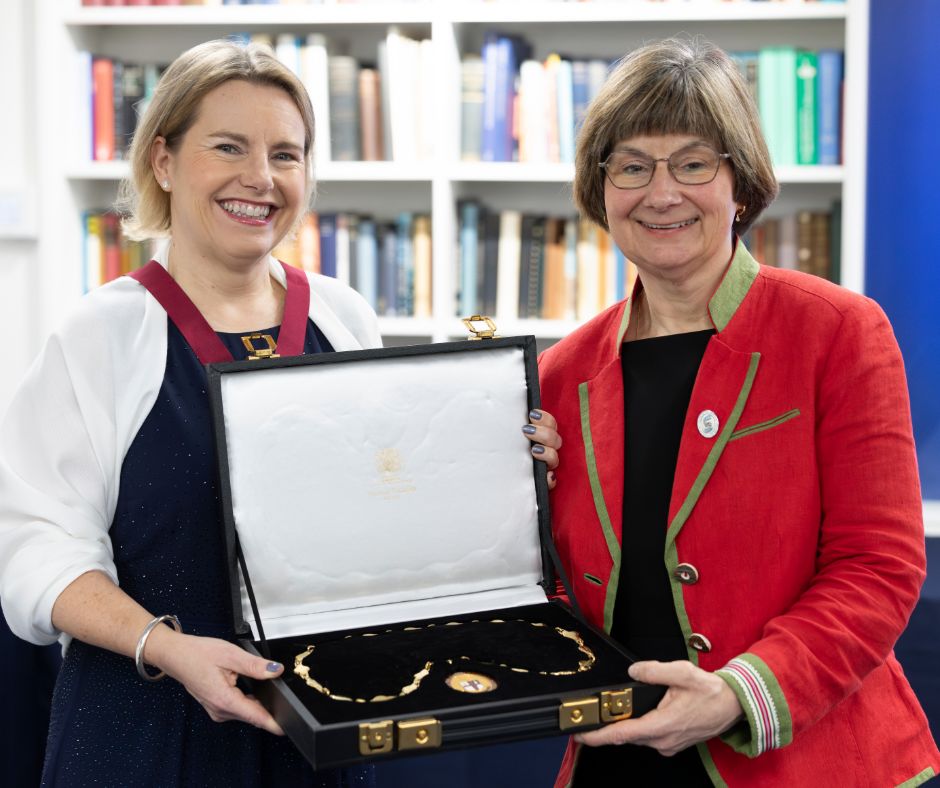
To mark the day, we spoke to Dr Sarah Pitt, newly appointed IBMS President, about her career journey, the women who inspired her, and her advice for the next generation.
Sarah’s career journey and personal life
- What first drew you to biomedical science, and what has kept you passionate about the profession?
I was fascinated by infectious diseases and really wanted to work in healthcare, so a career in a hospital pathology laboratory felt like a natural fit for me.
The work biomedical scientists do is vital to patient care. Most people don’t know who we are or what we do, but we play a key role in the accurate diagnosis of disease, helping patients even when they don’t realise it.
- You’ve worked across a variety of laboratories and teaching roles. How has that shaped your view of the profession?
I have worked with amazing, dedicated and clever people in hospital laboratories and in universities. I learned such a lot from all of them and all the different aspects of the pathology service. My main specialism is virology, but I now know a bit about things like how to prepare a skin biopsy sample for examination, what to look for in a blood slide from someone with anaemia, and how to spot a bacterium which is resistant to a particular antibiotic. We all have different skills and interests, but we work together for the benefit of patients.
- Have you had mentors or role models who particularly inspired you as a woman in science?
I have been supported and encouraged by both male and female colleagues and mentors throughout my career, but a few women have particularly inspired me. I was working at the Royal London Hospital in Whitechapel at the same time as Jocelyn Germaine, when she became the first female IBMS President. Although I didn’t meet her, as she was very senior and based elsewhere in the hospital, I was quietly proud that we worked at the same place.
My medical consultant at the time was Judith Breuer, who always had interesting ideas for research and for improving laboratory services, and who is now a Professor. My Head of Department at Liverpool John Moores University was Professor Hilary Evans, and I found it very encouraging that she was leading a university science department, which was unusual at the time. And of course, the four women who held the role of IBMS President before me are all great role models.
Leadership and advocacy
- How has your experience as IBMS Chief Examiner and educator influenced your priorities as President?
One of my key priorities as President is to raise the standing of the role of Training Officer within pathology laboratories. Education and training are so important in everything we do, but in my experience, they are not always supported and rewarded as well as they could be. However, highly trained and qualified biomedical scientists are vital to a high-quality pathology service, and ultimately to excellent patient care.
- How do you see your role as President helping women progress into senior or leadership positions within biomedical science?
I hope that people will look at me and think “how can I get that job?” I hope that I will be able to support and encourage colleagues along the way, and that I will be responsive to requests for help and advice.
- What advice would you give to women early in their careers who aspire to leadership roles in the profession?
My advice would be the same as for everyone. Look at what is required for the roles you aspire to, take advice from colleagues you respect, and look out for opportunities. Don’t be afraid to challenge yourself to take on new roles or jobs. The worst thing that could happen is that the role doesn’t suit you after all; the best thing that can happen is that you find a talent for something you didn’t know you had.
Media and public engagement
- You’ve become a trusted voice in the media for explaining microbiology and public health. How important is visible representation of women in science for inspiring the next generation?
I think it is important for us as scientists to come across as normal people, with the same questions and concerns about public health as everyone else. I also think women can sometimes bring a slightly different approach when appearing in the media, and that can be really valuable. I often include anecdotes from my daily life as a wife, daughter and aunt when explaining how I think about microbiological issues. I hope that girls considering a career in science can identify with the female scientists they see on TV or hear on the radio, and find that encouraging.
- How can biomedical scientists feel confident to share their knowledge publicly and act as role models?
As biomedical scientists, we are in a unique place within healthcare. We are working to help patients, but we are also interested in collecting and analysing data. That perspective is so valuable, but we often underestimate ourselves. It can be frustrating when a doctor or nurse is explaining how a test works and not doing it as well as an expert biomedical scientist would. We need to be more confident about that and find opportunities to engage with the rest of the healthcare team and the wider public – and then take them!
Encouraging the next generation
- What practical steps can schools, universities, and professional bodies take to encourage more girls to pursue biomedical science?
It is much better than it was when I was at school, but girls do still need persuading that science is something that they can do and be good at. IBMS members, pathology staff and university lecturers can (and indeed do) go into schools and attend careers events to promote the profession. A lot of those colleagues doing outreach work will be female, so hopefully that will inspire the next generation to consider biomedical science as a career option.
- How can the IBMS support young women in navigating the route from education to registration and beyond?
The IBMS has an equity, diversity and inclusion group. As one part of its remit, it can address barriers that young women might face, particularly early in their careers. The best way to ensure that the support is appropriate and clearly articulated is for young women to get involved with the IBMS. After all, one of the many things I am proud of about the IBMS is that it is run for its members by its members. So to change things, you have to get involved with your professional body.
International Day of Women and Girls in Science is a chance to celebrate the women already shaping biomedical science, while also encouraging the next generation to follow. As an organisation run by members, for members, the IBMS will continue to represent the profession and support biomedical scientists to develop, progress and lead.