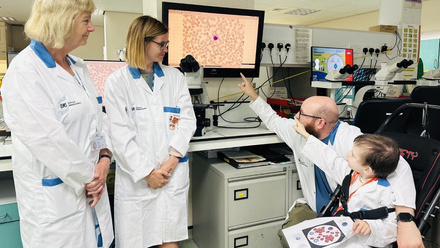
How hospitals are running Harvey's Lab Tours
For many young patients, getting a chance to explore the lab and meet the biomedical scientists behind their tests can be immensely comforting. It helps turn an unfamiliar experience into something more positive and empowering for patients and families alike.
As more sites look to introduce Harvey’s Lab Tours to their hospitals, teams have begun to share their experiences and advice. Each hospital will be slightly different, depending on the size of the laboratory, people involved in the programme and the way tours are run. However, the aim remains the same – to help young patients feel more confident about their healthcare.
From planning and preparation to activities and teamwork, the lessons learned by hospitals already delivering tours offer valuable guidance for laboratories thinking about getting started.
With Healthcare Science Week celebrating the vital role of biomedical scientists, now is a a perfect time to look at how laboratories across the UK are bringing Harvey’s Lab Tours to life.
Start by building the right team
At Scarborough, Hull and York Pathology Service (SHYPS), Deputy Training Lead Hasmita Rana worked alongside Transfusion Practitioner Tina Ivel to plan their first Harvey’s Lab Tour.
From the beginning, collaboration across departments was key. Volunteers came from different areas of the lab, while the hospital’s Children’s Play Specialists helped identify patients who might benefit most from a visit.
Before launching their programme, the team also reached out to hospitals already running tours, including Dumfries and Galloway and Addenbrooke’s Hospital, to learn from their experience.
Hasmita says working with colleagues across disciplines helped strengthen the tours from the start.
We’ve had volunteers from Transfusion, Haematology and Biochemistry, everyone brings something different to the table.
At Great Ormond Street Hospital (GOSH), Advanced Transfusion Practitioner Rachel Moss emphasises the importance of building a small team of enthusiastic staff who feel confident engaging with young visitors.
Find a team of Biomedical Scientists that are keen. Once they’ve done a few visits they’ll get into a routine and begin to anticipate some of the questions children ask.
Having a clear point of contact, often someone already working closely with clinical teams, can also help coordinate visits effectively.
Plan ahead and prepare the right resources
Running a successful lab tour requires careful planning ahead of time.
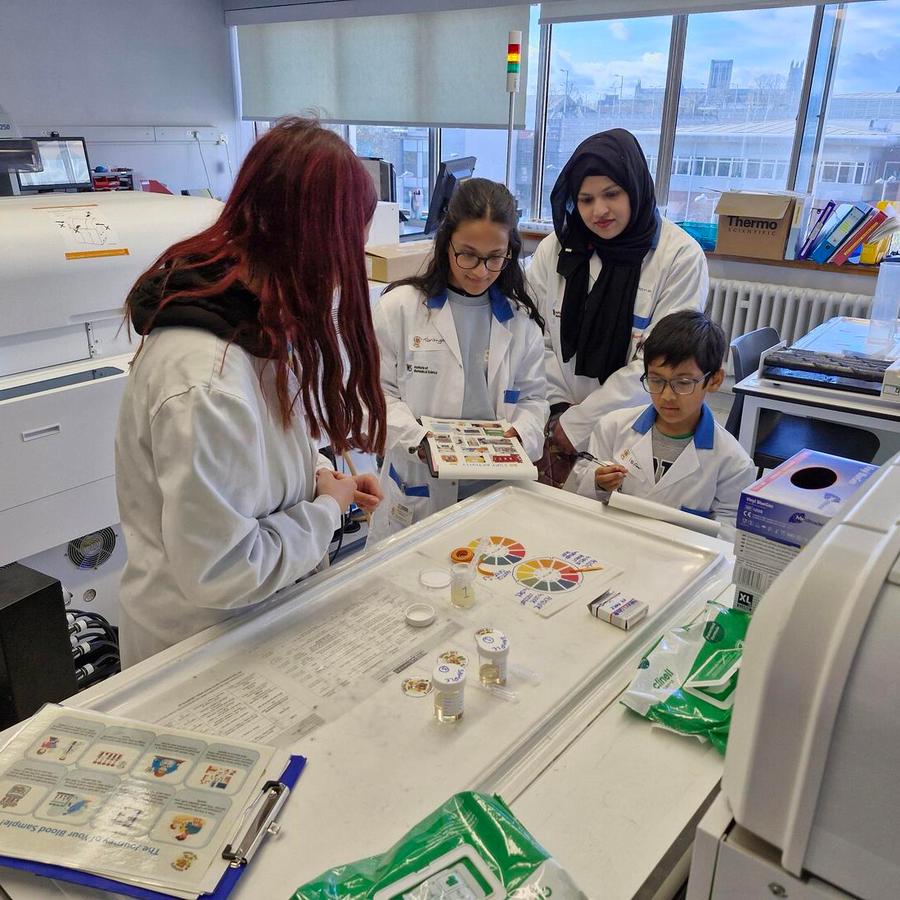
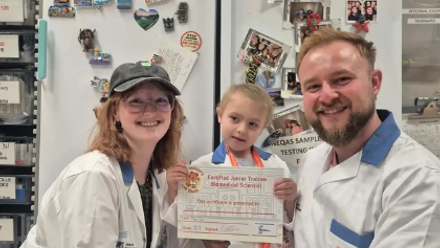
Photo features Katarina Johnson, who volunteered for a lab tour at SHYPS
At SHYPS, Hasmita and Tina developed a detailed Standard Operating Procedure (SOP) to support the programme. This includes planning guides, risk assessments, safeguarding measures and templates for certificates and badges.
Families are also asked to complete a short pre-assessment form ahead of each visit, helping the team understand individual needs such as mobility considerations or sensory sensitivities.
Similarly, at Great Ormond Street Hospital, clinical teams complete a questionnaire before each tour to confirm infection control requirements and ensure the visit is suitable for the patient.
Every tour request is carefully reviewed based on the child’s age, diagnosis and reason for visiting the hospital.
Practical preparation on the day is equally important. Teams often arrive early to check equipment, prepare materials and ensure departments are ready to welcome the visiting family.
Interactive activities bring the science to life
Across all sites, one thing always stands out: interactive activities make the biggest impact.
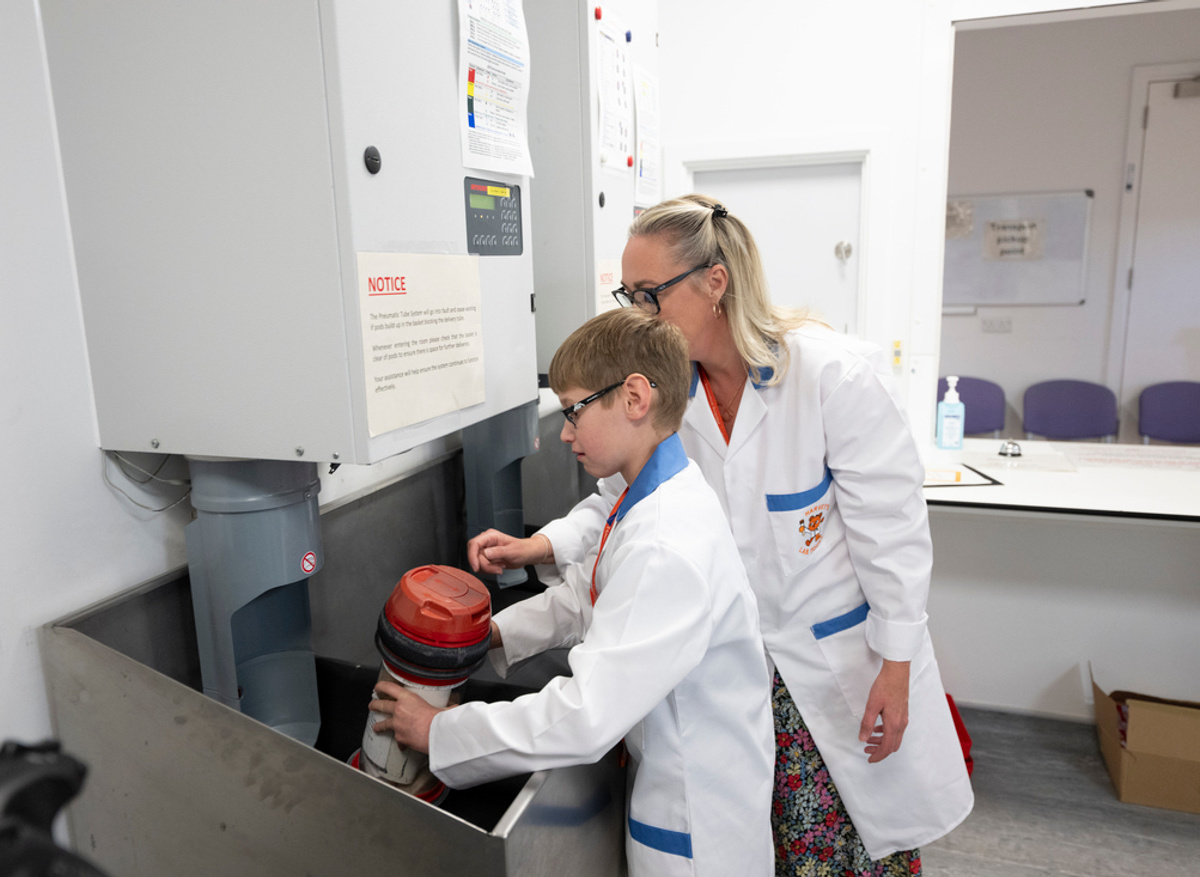
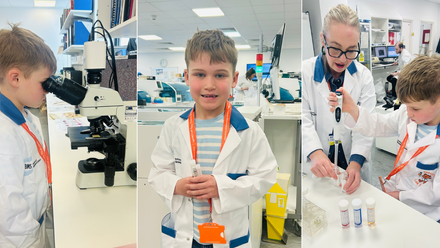
Using the lab tube system
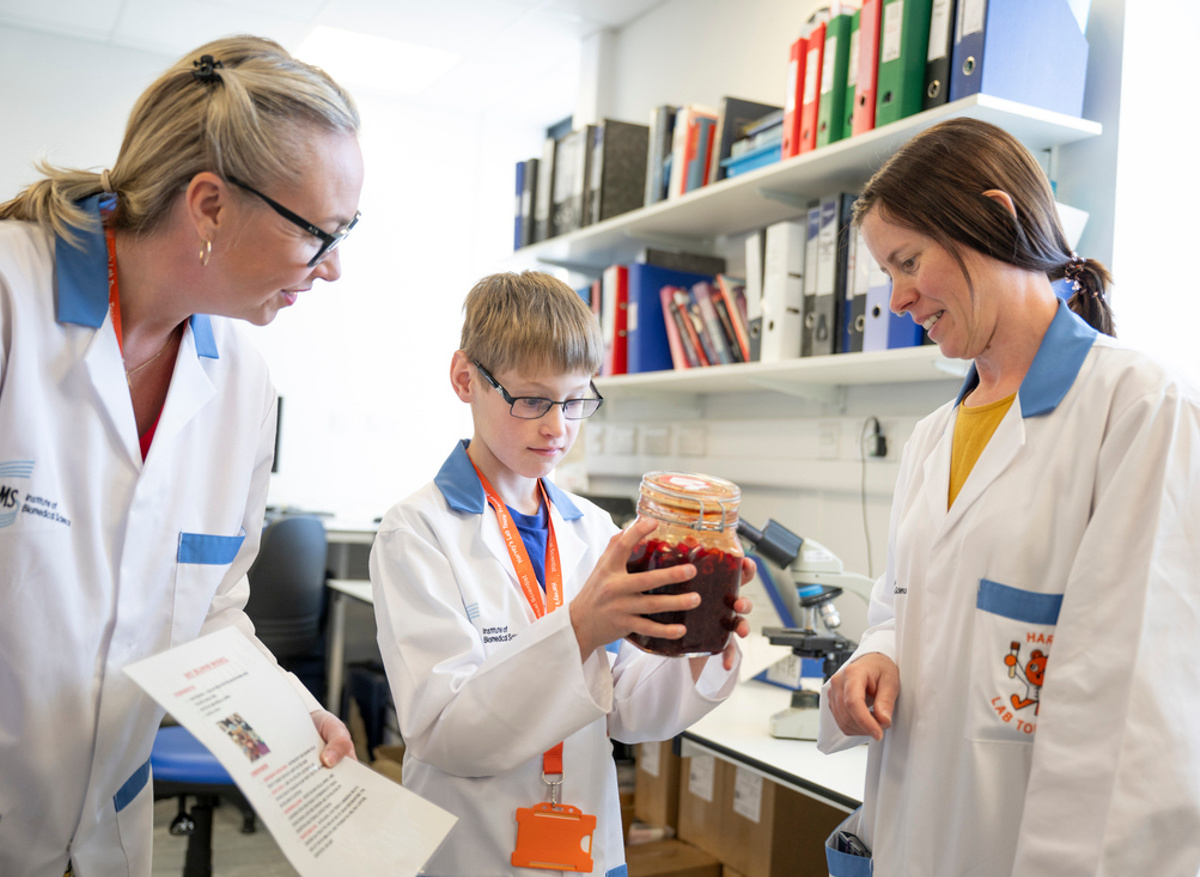
Examining a blood model
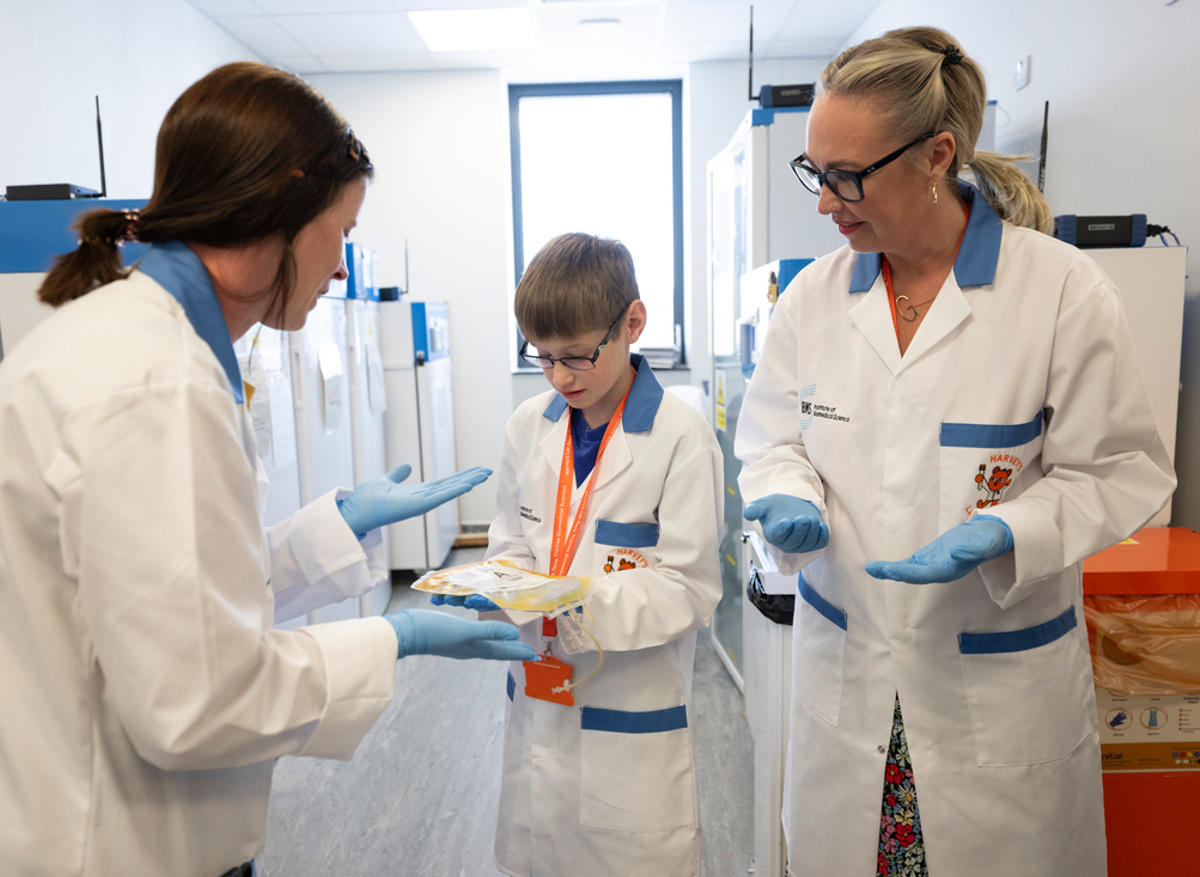
Learning about sample handling
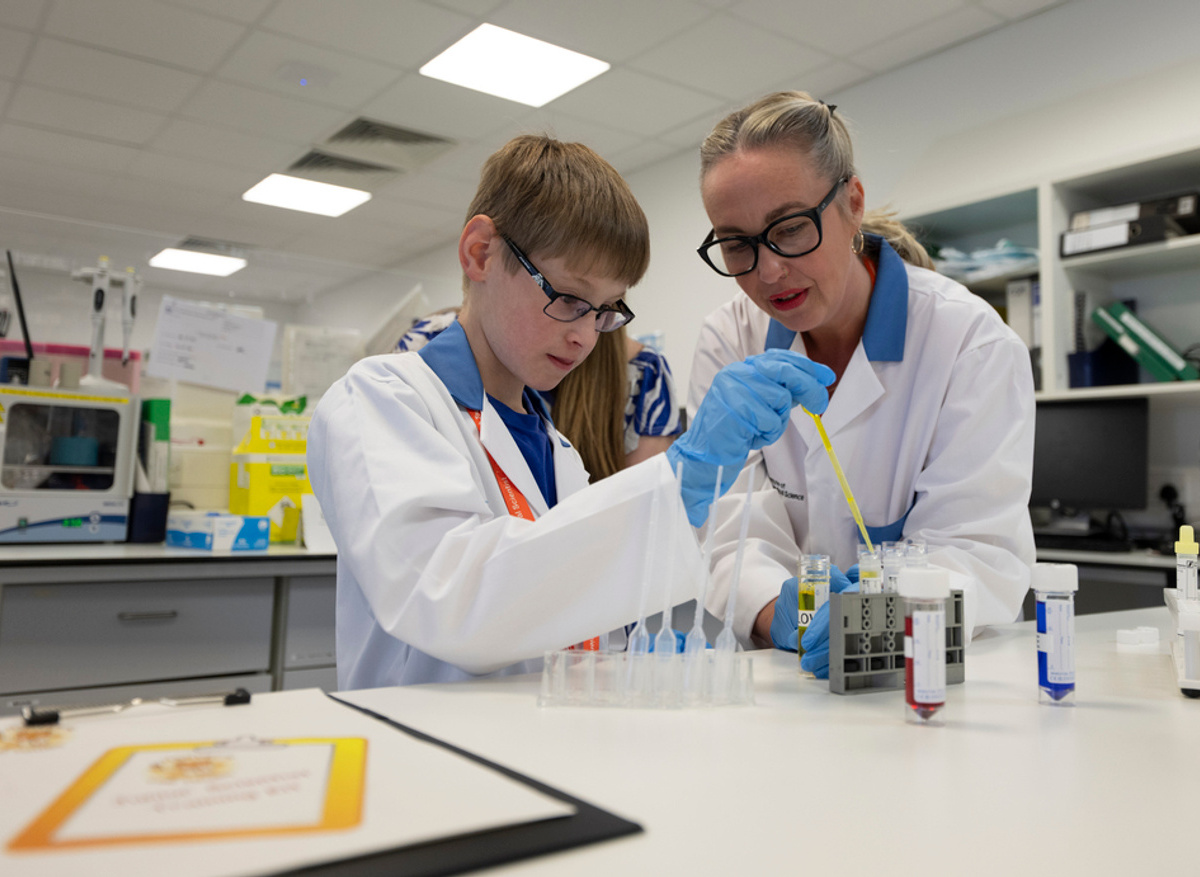
Pipetting in the lab
Images from Finn's Lab Tour at Dumfries and Galloway Royal Infirmary
At York and Scarborough, children can label tubes, fill them with “fake blood”, look down microscopes and centrifuge samples. Activities like these mirror real laboratory processes and help explain how their samples are handled.
Labelling their own sample gives children a sense of ownership over something that usually feels out of their control.
At University Hospital Southampton (UHS), Senior Biomedical Scientist Chloe Aman and her team have introduced a range of creative activities to help children understand laboratory science.
Children might create Play-Doh models of abnormal red blood cells, try out blood grouping experiments, or take part in demonstrations like the “emotions volcano”, which helps young visitors talk about their feelings during healthcare visits.
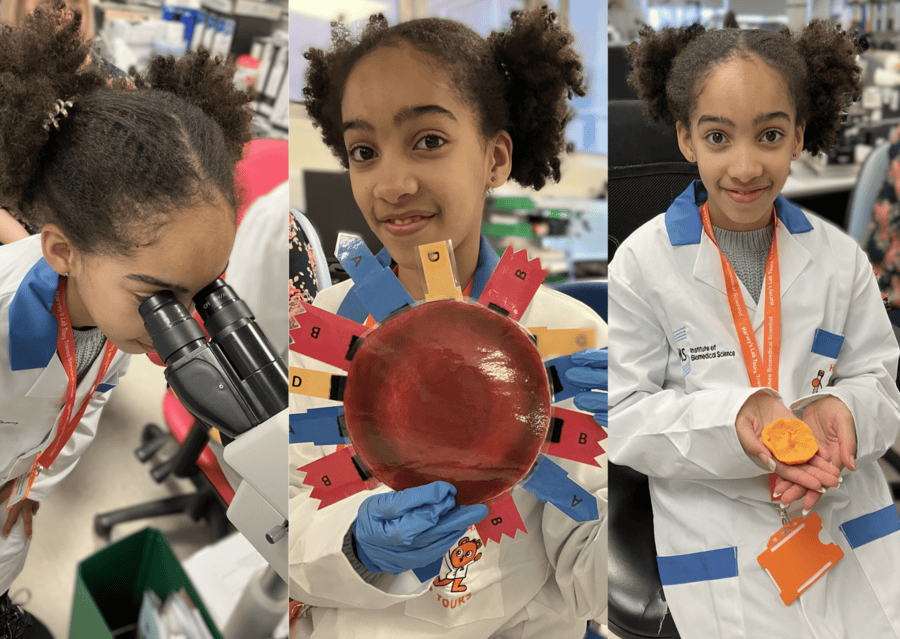
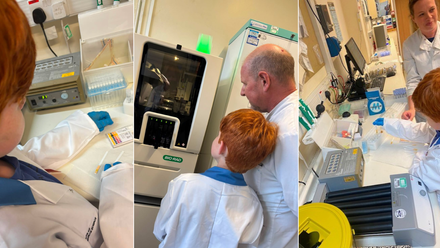
Images from Betsy's Lab Tour at University Hospital Southampton
In some cases, the experience can become even more personal. If a child brings their own blood sample from clinic, the team may prepare a blood film so they can view their own cells under the microscope.
Seeing something that belongs to them under the microscope makes the process less abstract.
At Great Ormond Street Hospital, Rachel Moss says experiments such as dry ice bubble demonstrations or pipetting activities never fail to capture young visitors’ attention.
Dry ice and bubbles have guaranteed squeals of fun from our young visitors.
Adapting the tour to each young patient
While planning is key, flexibility can often be just as important. Children taking part in lab tours may have very different needs, interests and energy levels. Some may want to engage with every activity, while others might need shorter visits or more time to take breaks.
At SHYPS, teams carefully monitor each child during the tour.
If a child is feeling tired or anxious, we slow things down or take a break. We adapt every visit to the child and their family.
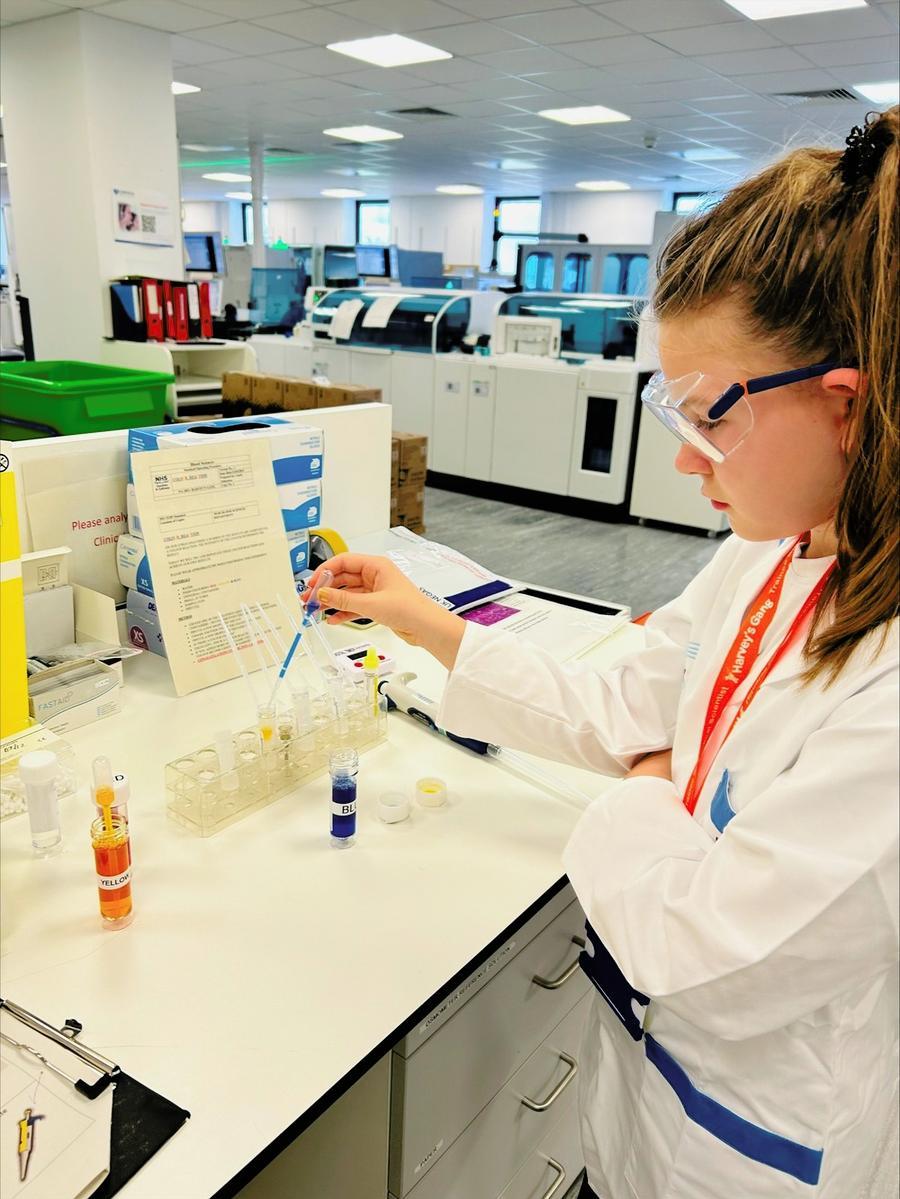
Image from Chloe’s Lab Tour at Dumfries and Galloway Royal Infirmary, where the team paused the visit when she began to feel unwell and arranged for her to return another day.
At UHS, Chloe also says it is important to be adaptable.
Plan a rough route, but be flexible. The patient may be really interested in one area, and that becomes the focus of the visit.
The people behind the samples
For many biomedical scientists, Harvey’s Lab Tours offer a rare opportunity to meet the people whose samples they analyse every day.
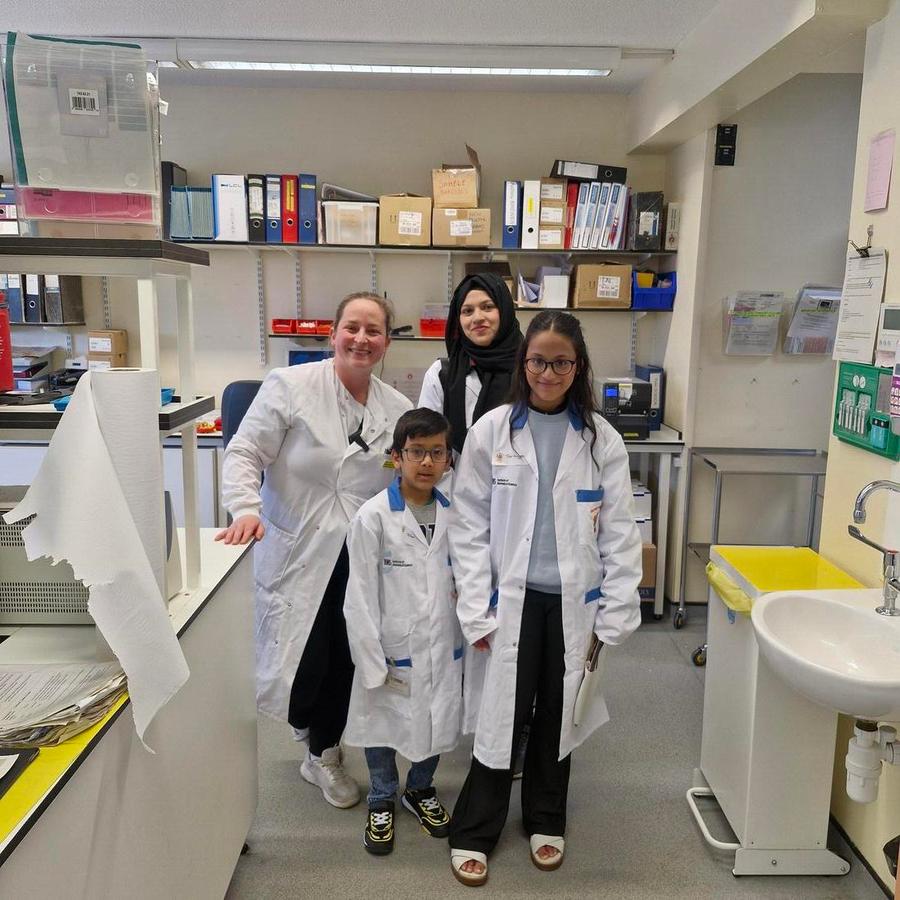
Photo features Charli Trouth, who volunteered for a lab tour at SHYPS
Hasmita Rana says that this connection can be one of the most meaningful aspects of the programme.
We work behind the scenes and it’s easy to forget there’s a real child behind every sample. These tours remind us of our role in their care.
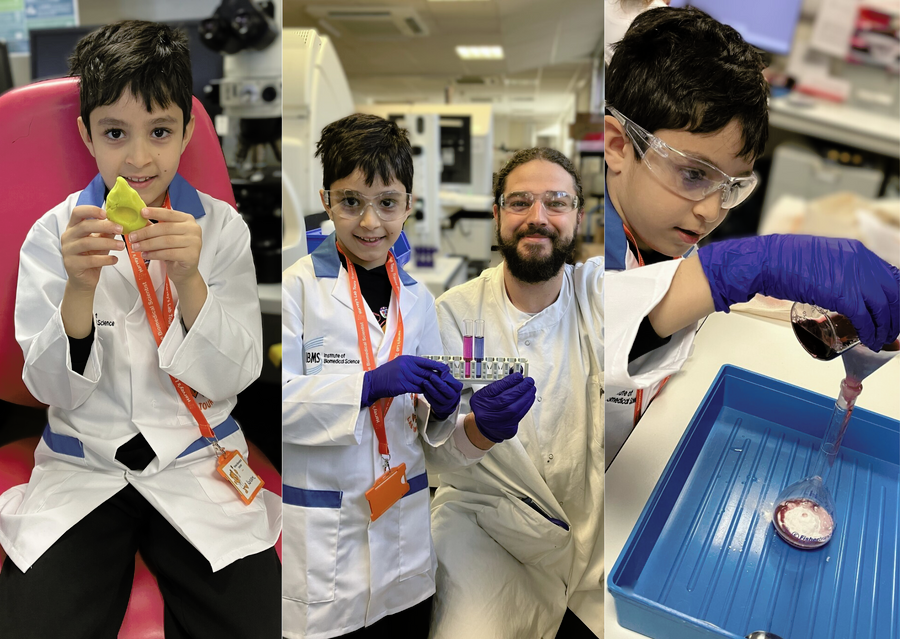
Images from Kareem's Lab Tour at University Hospital Southampton
Families often leave with a new appreciation for the work happening in the laboratory, while children gain a better understanding of their treatment and the science supporting it. In some cases, the experience can even inspire future careers in science.
Thinking about starting a tour?
The thoughts shared by laboratories already running Harvey’s Lab Tours show that with the right planning and teamwork, introducing visits can be both achievable and rewarding. Staff who have launched programmes consistently recommend:
- Starting with clear documentation, including risk assessments and planning guides
- Working closely with children’s wards and play specialists
- Building a small team of enthusiastic volunteers
- Using hands-on activities to make the science engaging and accessible
- Learning from other hospitals already running tours
As more hopsital teams introduce Harvey’s Lab Tours, the programme continues to grow – creating opportunities for young patients and their families to better understand the science behind their care.